Il blog Kaen
Japanese vs German knives: the real differences and which suits you
Steel, edge angle, weight, bolster and maintenance: the brand-free comparison of the two great kitchen knife styles, with numbers and without fanboys.
Kaen5 min di lettura
The two styles that dominate the world's kitchens are German (Solingen: Wüsthof, Zwilling and company) and Japanese (Seki, Sakai, Tsubame: Gyuto, Santoku, Nakiri). Both make excellent knives, and the internet is full of fans of each camp. This comparison is not about camps: it is about numbers and use, so you can pick the one that fits how you cook.
The table that sums it up
| Classic German knife | Japanese knife (Kaen Damascus) | |
|---|---|---|
| Steel hardness | 56–58 HRC | 60–62 HRC |
| Edge angle (per side) | 17–20° | 12–15° |
| Blade thickness | 2.5–3.5 mm | 1.8–2.2 mm |
| Weight (20 cm chef) | 250–350 g | 200–340 g |
| Bolster | Yes, thick, full height | None, or minimal |
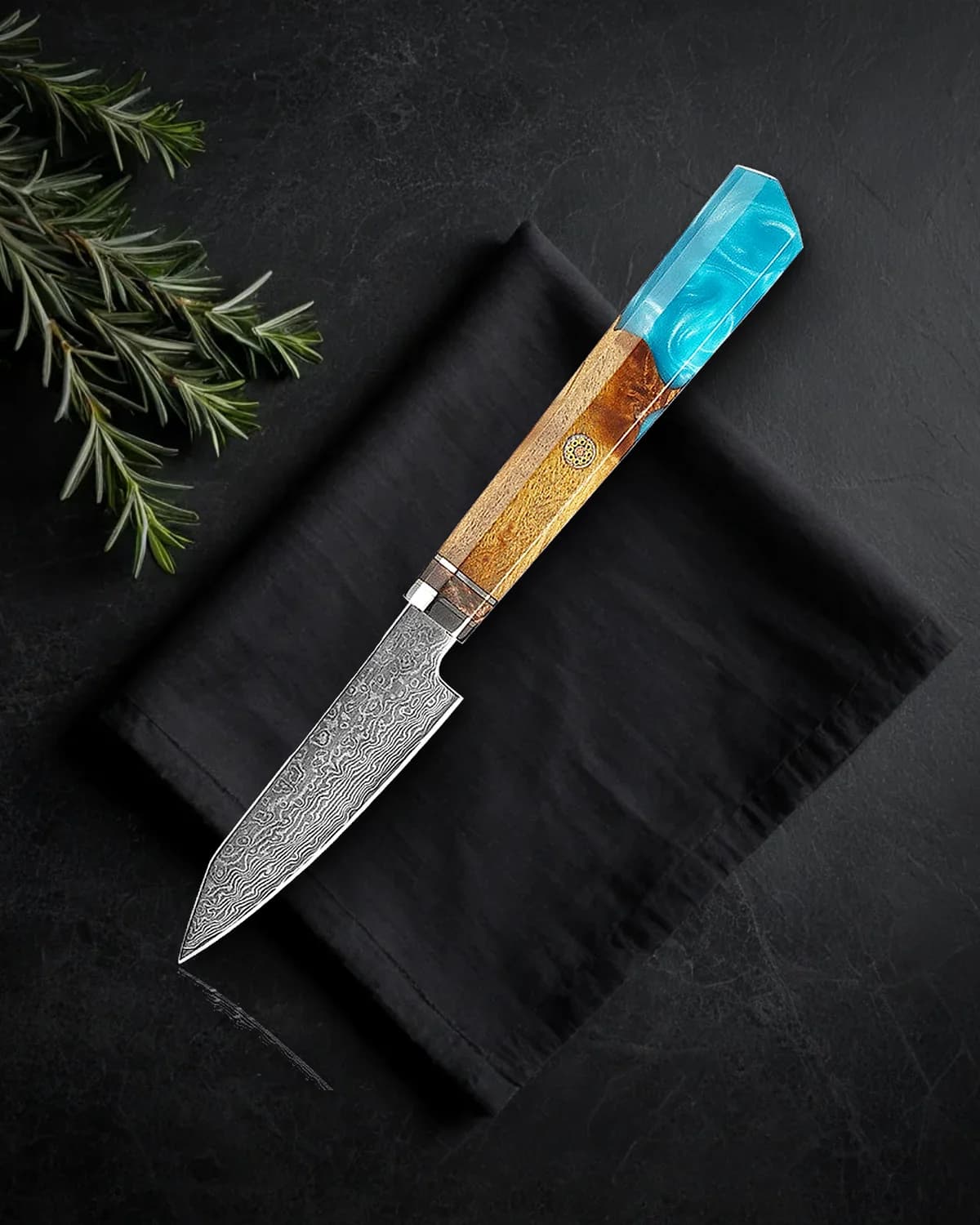
| Handle | Riveted polymer | Octagonal, resin and wood |
| Edge retention | 3–5 weeks | 8–12 weeks |
| Sharpening | Easy, any honing rod | Water stone; the rod only realigns |
| Tolerance to abuse | High: bones, frozen food, dishwasher (bad, but survives) | Low: wooden board and hand washing |
| Feel | Sturdy, a "hammer" | Light, a "scalpel" |
Steel: hardness and what it means
A German knife uses steels like X50CrMoV15, hardened to 56–58 HRC. It is a tough steel: it bends before it breaks, forgives knocks, sharpens on anything. In exchange, the edge rolls with use and needs the honing rod almost daily.
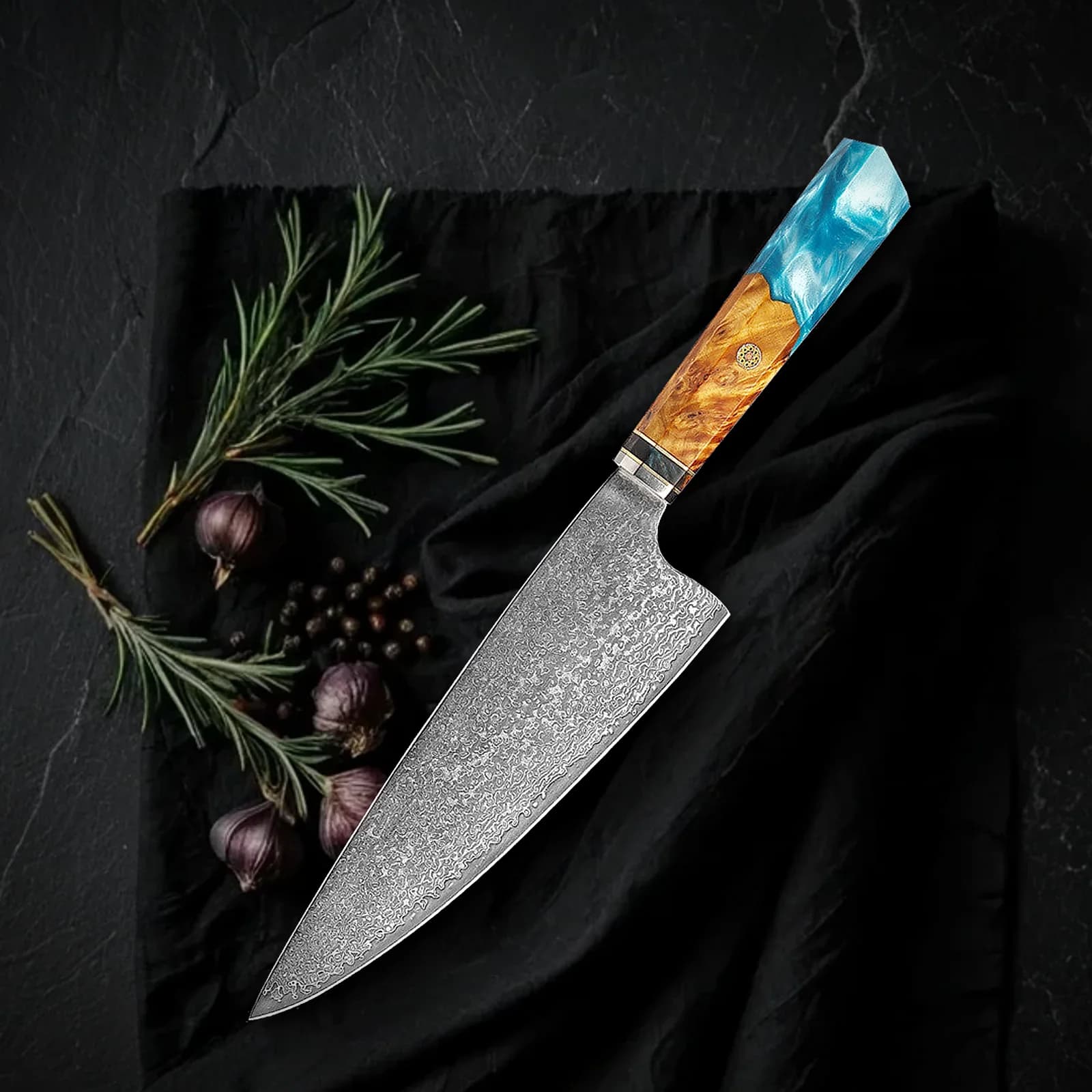
A Japanese Damascus knife carries a harder core, at 60–62 HRC, wrapped in softer layers that give it toughness. The edge does not roll: it keeps cutting the same for weeks. But steel that hard is more brittle: a hit against a bone or a fall onto the floor can chip it. It is the difference between a hammer and a scalpel. The details are in what Damascus steel is.
Angle and thickness: why the Japanese knife cuts "on its own"
This is the difference you feel in your hand. Hard steel takes a more acute edge: 12–15° per side against 17–20°. Less angle and less thickness means less metal having to push its way through the food. A tomato cuts under the weight of the knife; an onion does not get crushed; fish comes off clean.
The German knife, thicker and with more angle, cuts by pushing and wedging: it works, but it asks for more force and crushes more. That is exactly what makes it so sturdy.
Weight, balance and bolster
The classic German knife has a thick bolster between blade and handle. It protects the fingers and adds weight at the back, towards the hand. The result is a knife balanced at the bolster, sturdy, that "drops" onto the food.
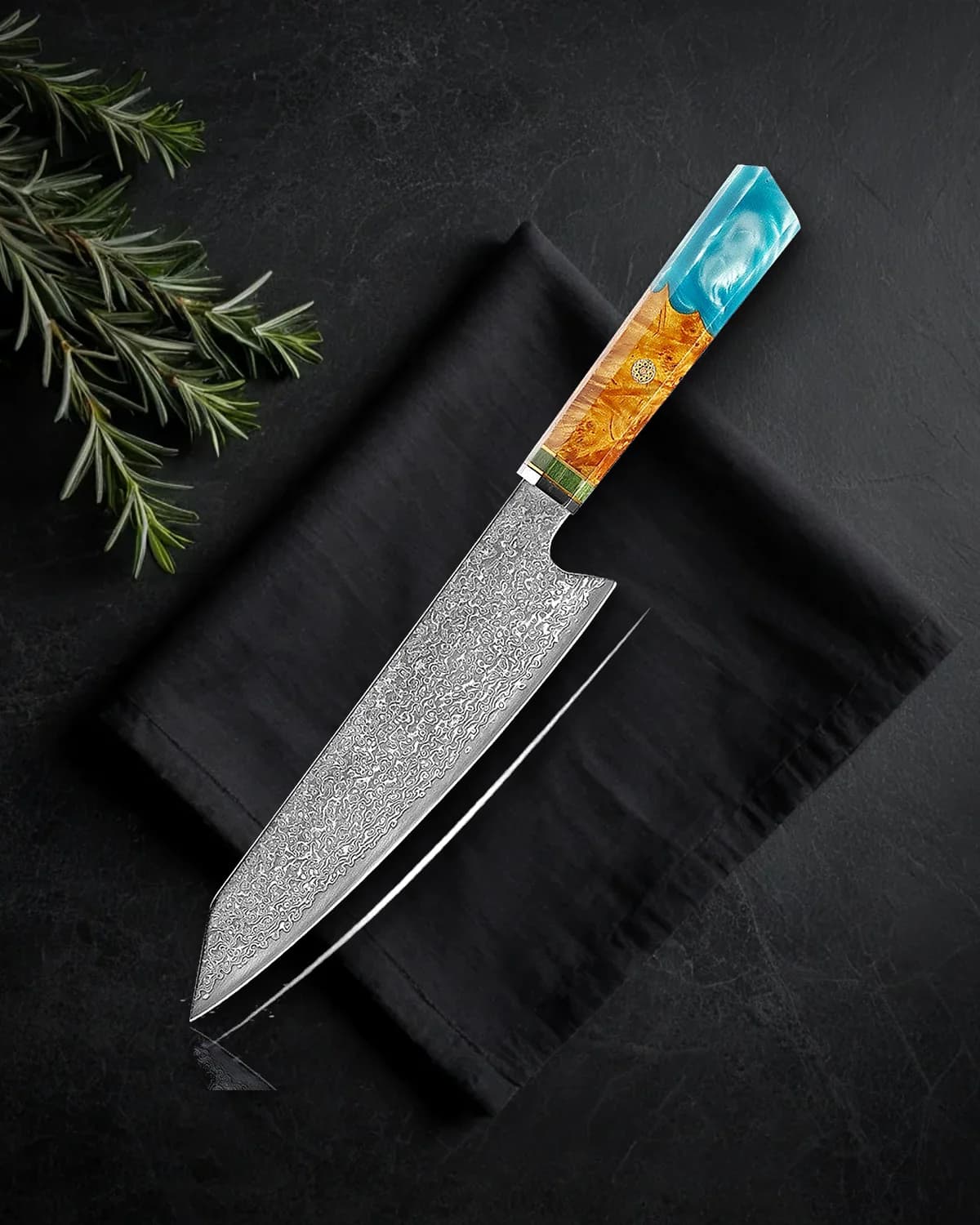
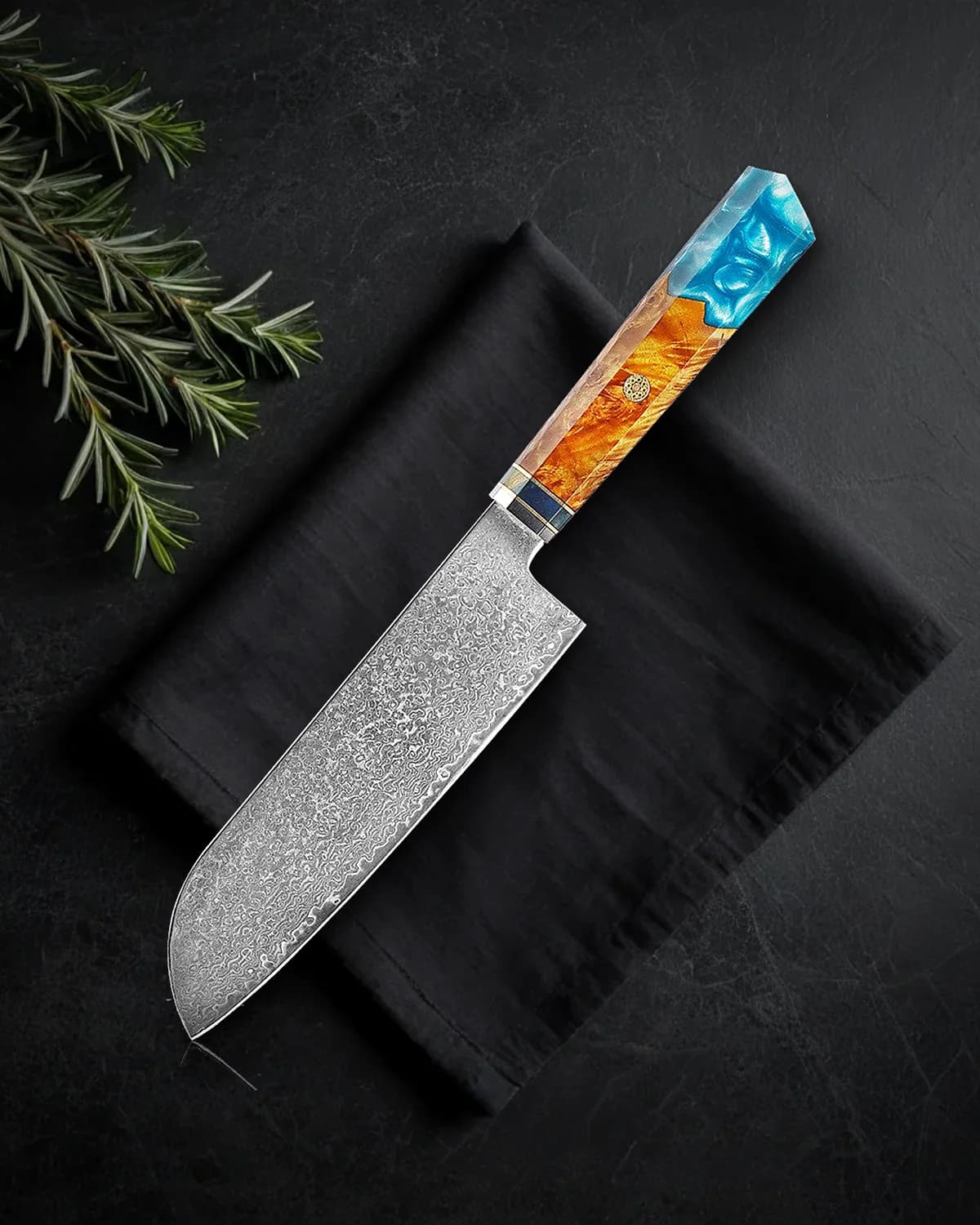
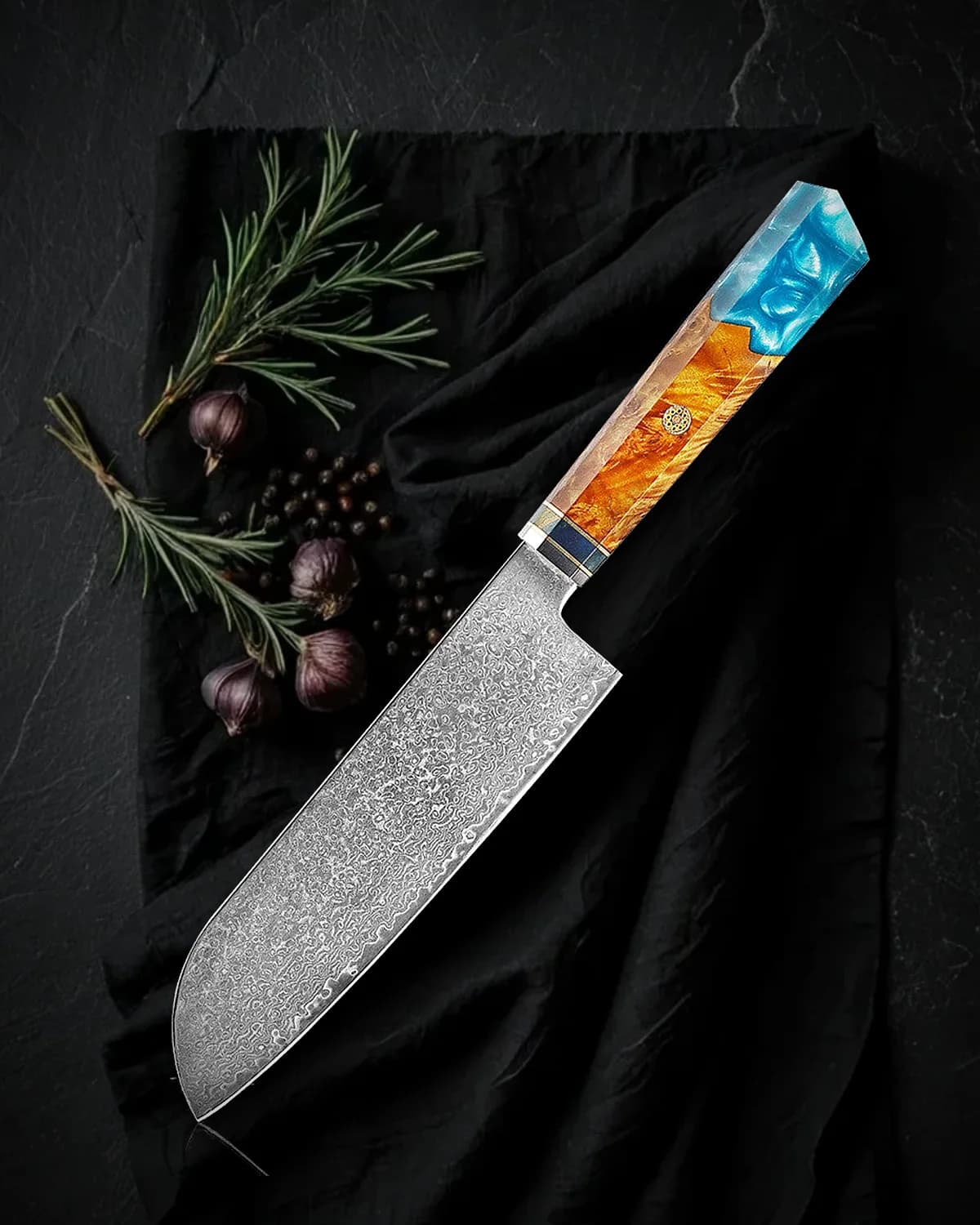
The Japanese knife has no bolster (or a minimal one). The weight sits in the blade and the handle is light, so the balance is forward: the knife feels like an extension of the hand and moves fast. The pinch grip (index finger and thumb on the blade, just in front of the handle) is more natural on a Japanese knife, precisely because there is no bolster in the way. The octagonal handle on Kaen knives is designed for that grip.
Maintenance: what nobody tells you before you buy
A German knife forgives almost everything. You can cut a chicken through the bone, split a frozen squash, put it in the dishwasher (you should not, but it survives) and sharpen it with a diamond rod in ten seconds.
A Japanese knife asks for four habits: a wooden or plastic board (never glass or marble), hand washing and immediate drying, a sheath or magnetic strip, and a water stone every few months. It is not more work, it is different work: 30 seconds a day and 10 minutes every three months. In exchange, weeks pass between sharpenings, not days. They are in the care guide and the sharpening guide.
Shapes: one knife for everything vs one knife for each job
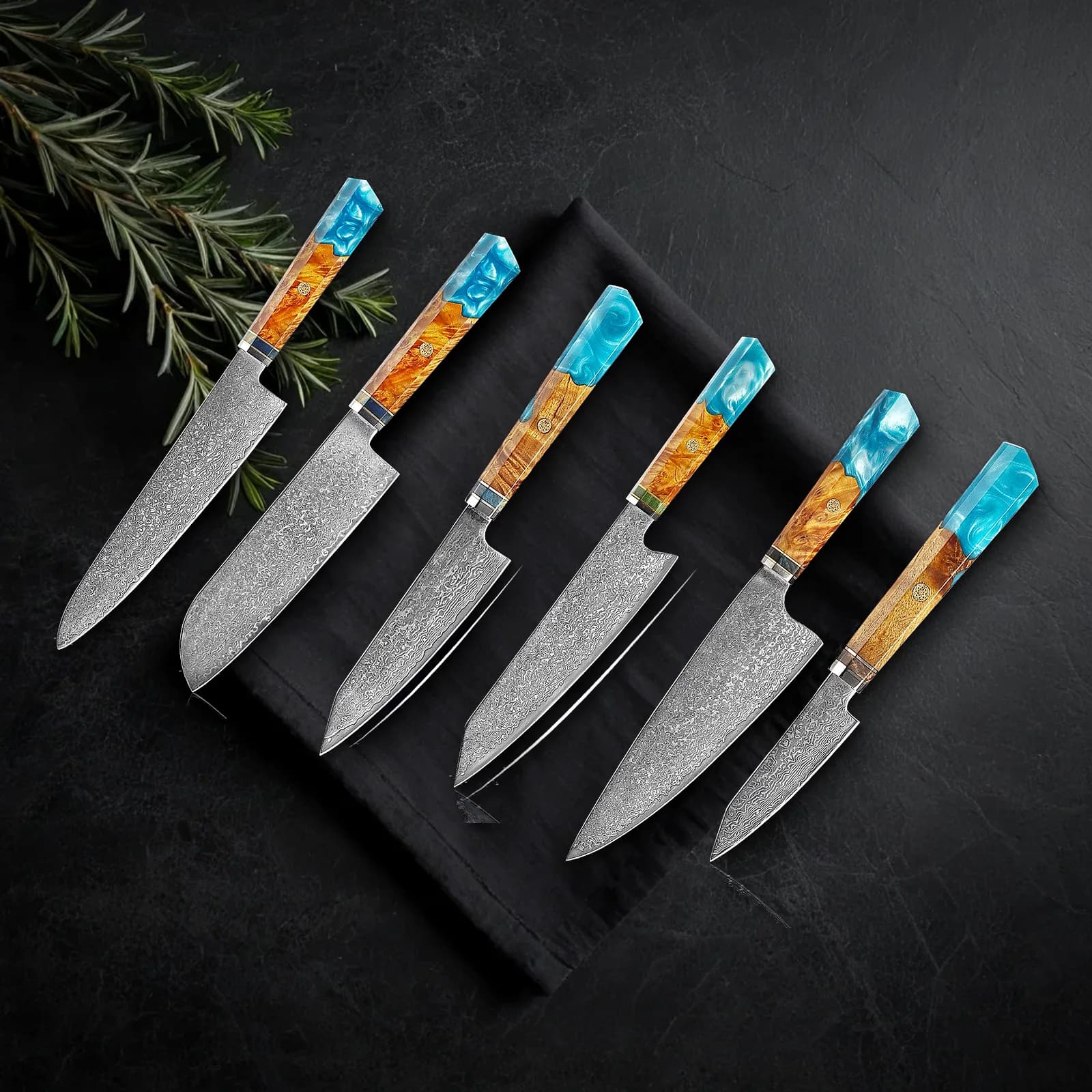
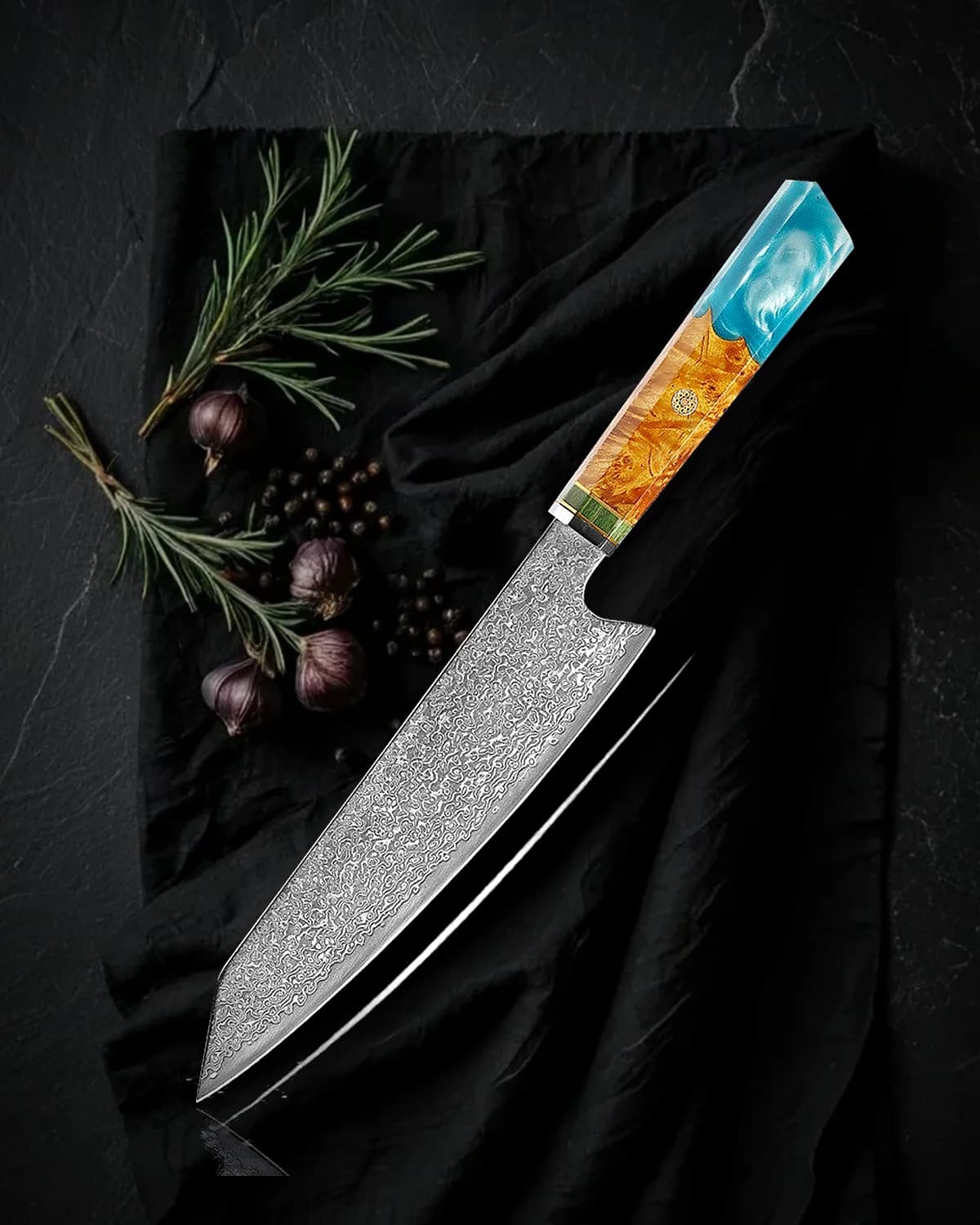
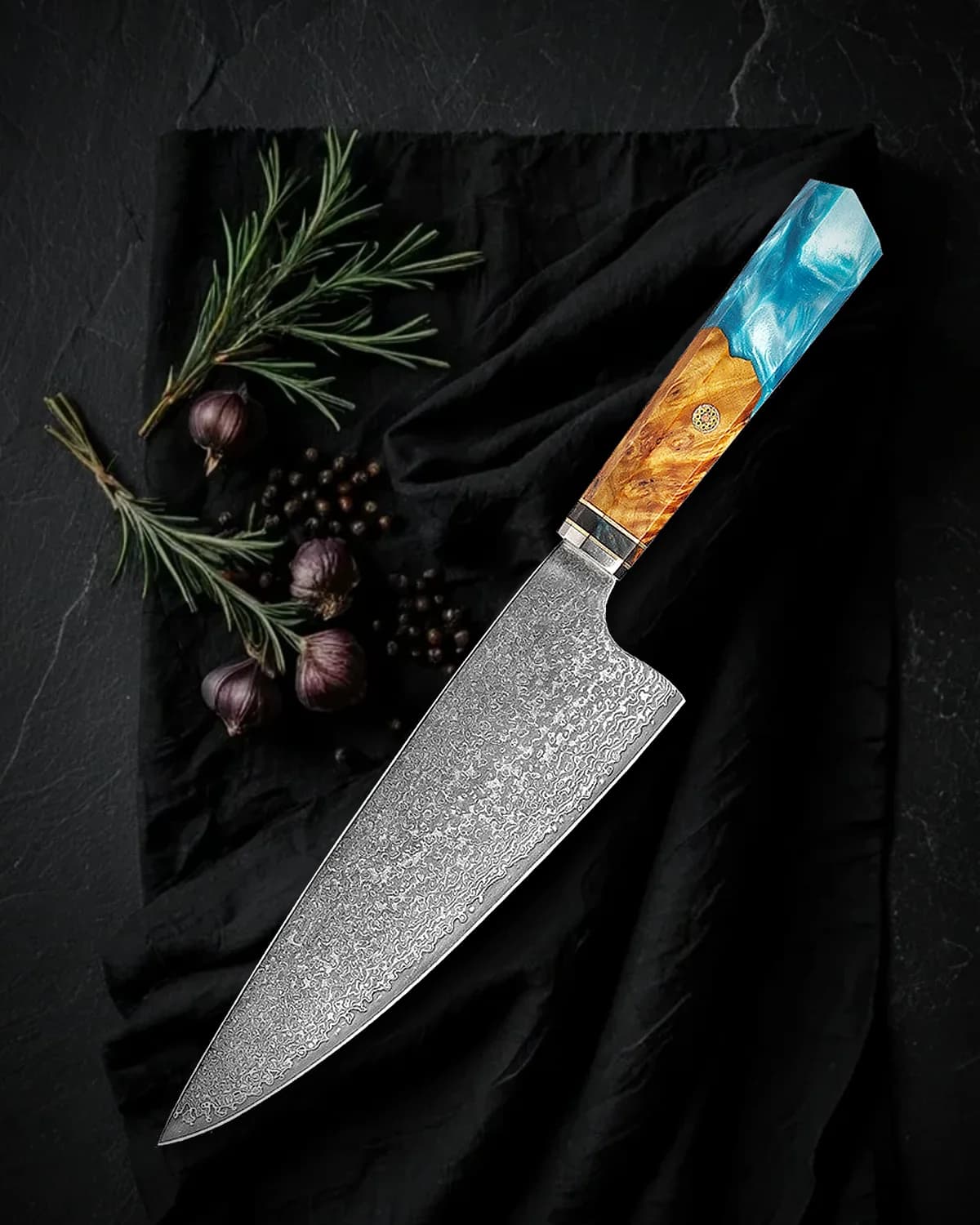
German cutlery revolves around the 20 cm chef knife, plus a paring knife and a bread knife. Japanese cutlery has a shape for every job: Gyuto (chef), Santoku (all-purpose), Nakiri (vegetables), Bunka (all-purpose with a tip), Kiritsuke (long push cuts, fish) and Petty (precision). You do not need all of them, but having the right shape for what you cut most changes the experience. We compare the two best sellers in Gyuto vs Santoku.
So, which suits you?
Choose German if:
- You cut bones, frozen food or very hard things often.
- You do not want to change habits: dishwasher, any board, honing rod and done.
- You like a heavy knife that "drops" onto the food.
Choose Japanese if:
- You cook daily and value cutting with less effort and more precision.
- Thirty seconds of drying is worth weeks without sharpening to you.
- You want food to look better: thin slices, uncrushed tomatoes, clean fish.
- You want a beautiful object you feel like using every day.
Many kitchens end up with both: a German "workhorse" for bones and frozen food, and a Japanese Gyuto for everything else. It is a very sensible combination.
Where to start with a Japanese knife
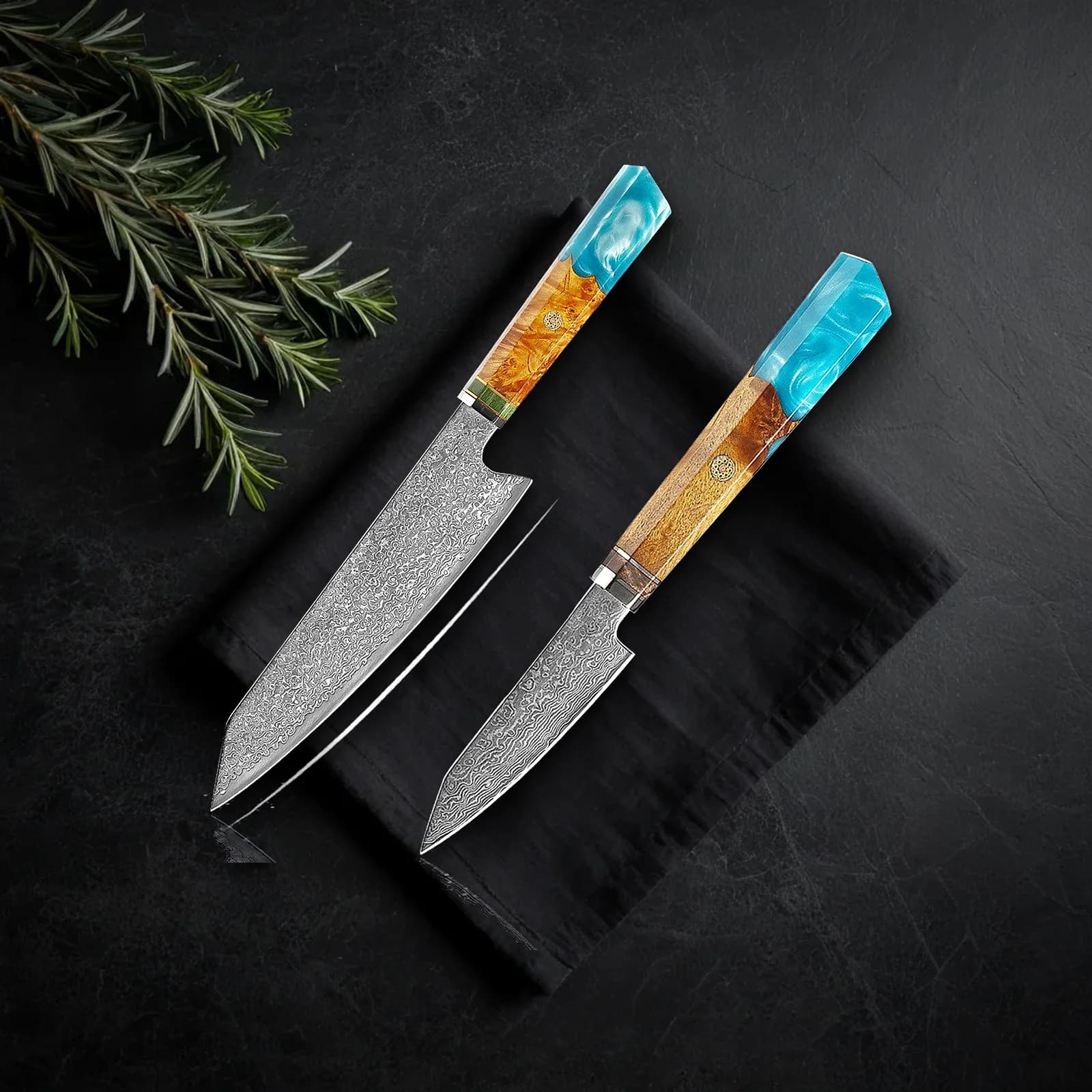
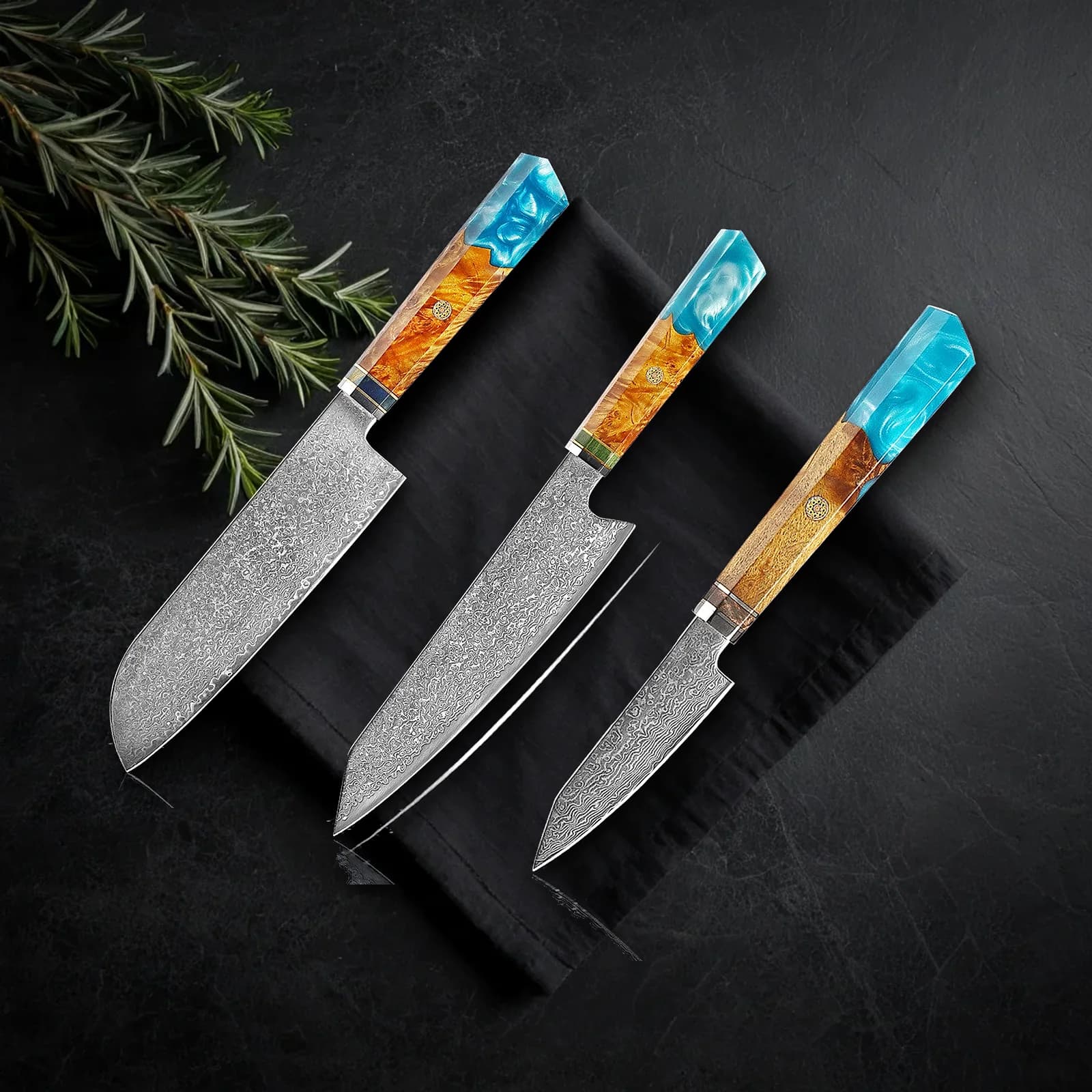
If you come from a German chef knife, the natural step is the 20 cm Gyuto: same function, a different experience. If you want to cover the whole kitchen at once, the Complete Set (Gyuto + Nakiri + Petty) costs 69.90 € less than the three bought separately, with sheaths, free shipping and 30 days to try it in your kitchen: if you do not feel the difference, send it back.
Domande frequenti
- Which is better, a Japanese or a German knife?
- It depends on use. The Japanese knife cuts with less effort and holds its edge for weeks (60–62 HRC steel, 12–15° edge), but needs a wooden board, hand washing and a water stone. The German knife is sturdier and tolerates bones, frozen food and neglect, in exchange for far more frequent sharpening.
- Do Japanese knives break easily?
- They do not break, but they can chip if used on glass, marble or bones, or if dropped on the floor. With a wooden board and normal use they last a lifetime.
- Can I hone a Japanese knife with the rod from my German knife?
- A smooth or ceramic rod is fine for realigning the edge between sharpenings; an aggressive diamond rod can damage hard steel. Real sharpening is done on a 1000/6000 water stone, every few months.
- Which Japanese knife replaces the German chef knife?
- The 20 cm gyuto: same function and technique, with a thinner, lighter blade and a far more acute edge.