Le blog Kaen
How to tell if a Damascus knife is real (and not laser-etched)
Six checks you can do at home to tell real Damascus steel from a pattern etched onto cheap steel.
Kaen5 min de lecture
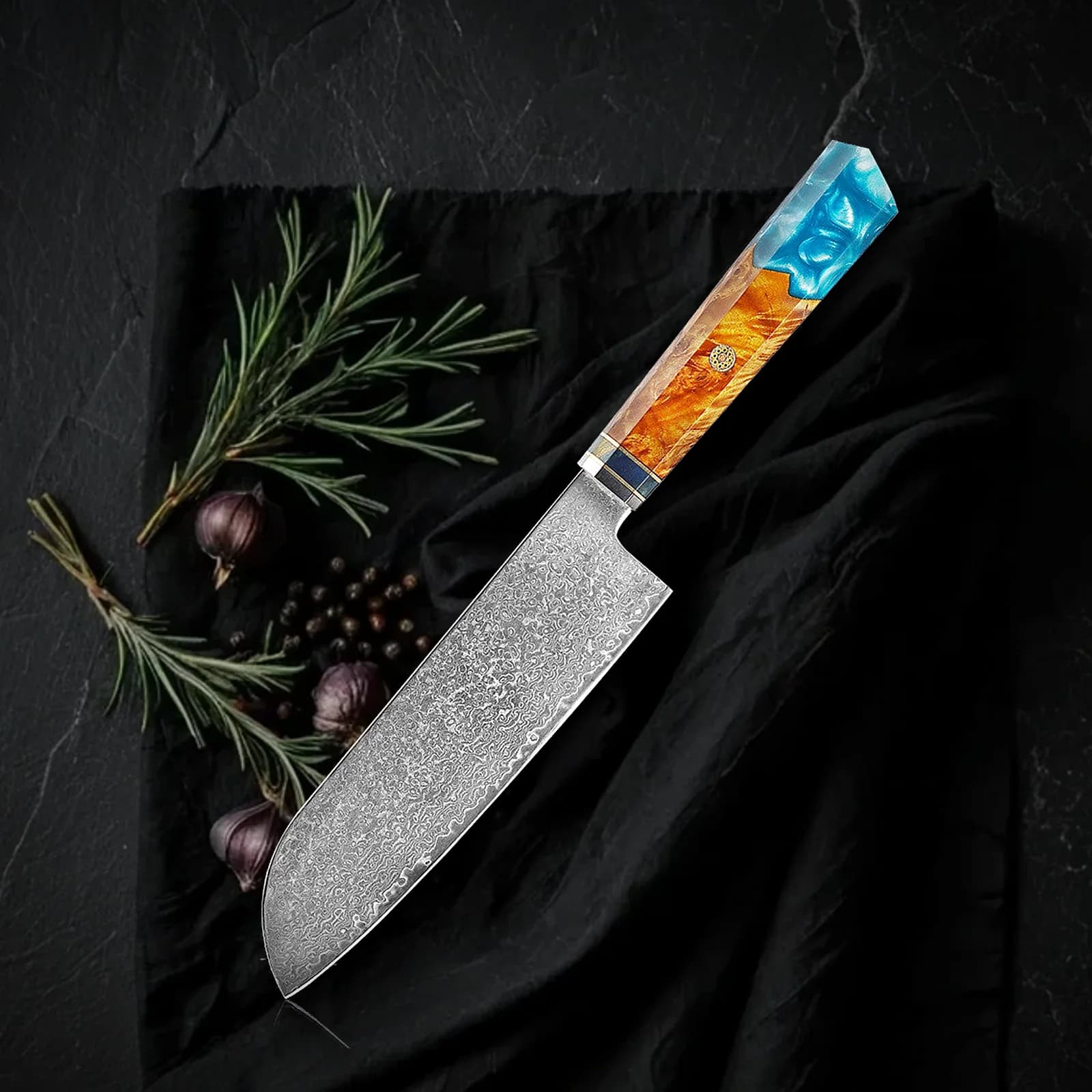
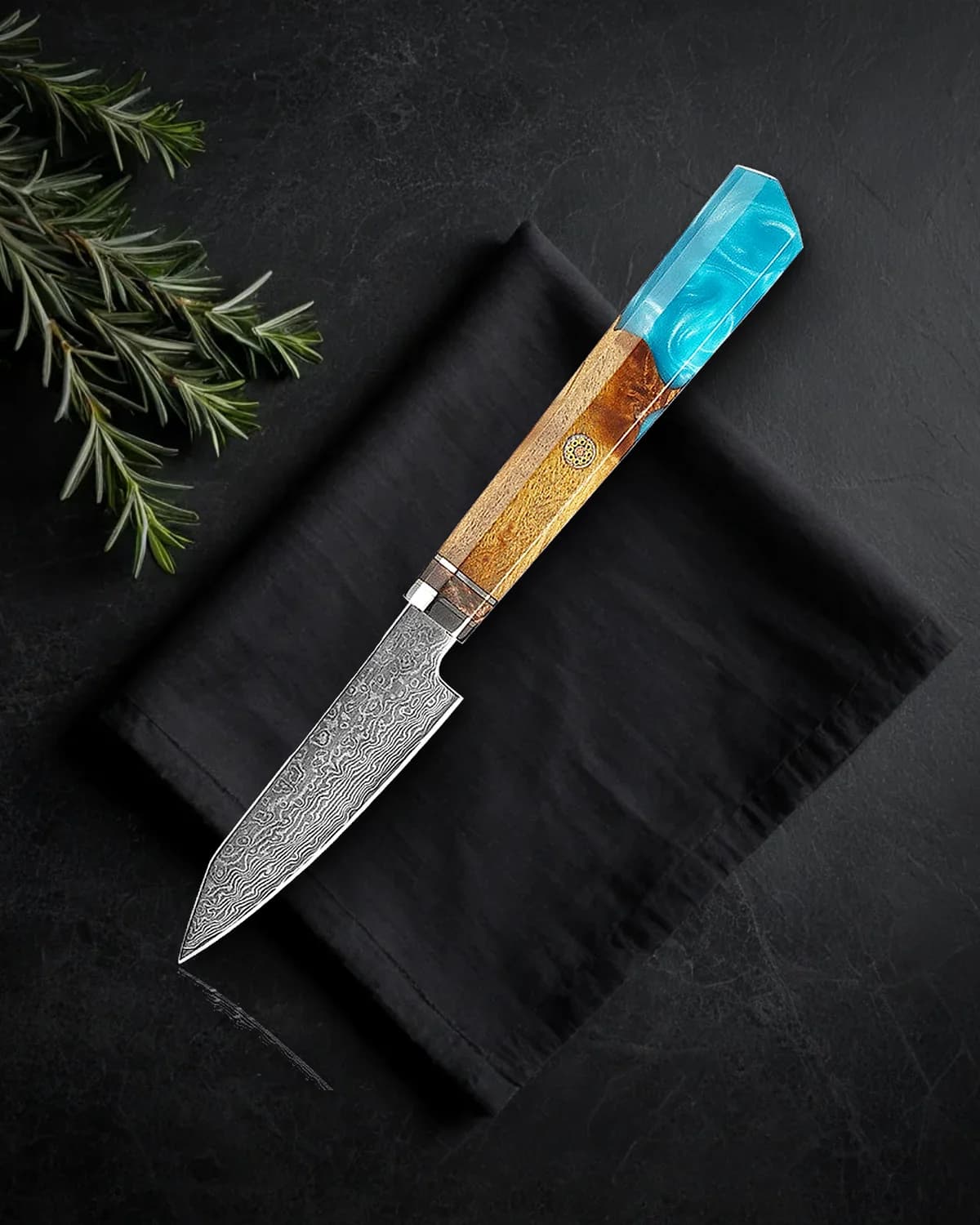
There are more "Damascus" knives on the market than there is real Damascus steel. With the popularity of those pretty waves, many manufacturers laser- or acid-etch the pattern onto an ordinary steel blade and sell it as Damascus. In a photo they look the same. On the board they do not: the etched knife cuts like the soft steel underneath, and the pattern vanishes with the first sharpening. Here is how to tell them apart before (and after) buying.
Why fake Damascus exists
A real Damascus knife is expensive to make: different steels have to be stacked, forge-welded, folded several times, heat-treated as a hard steel (60–62 HRC) and then ground and etched to reveal the layers. An etched knife is a 50–54 HRC blade (supermarket steel) with a pattern printed on top. It costs a fraction and, at first glance, it fools people.
The difference is not cosmetic: it is the difference between an edge that lasts weeks and one that rolls in days. To understand where that difference comes from, start with what Damascus steel is.
1. Look at the edge, not the blade
The fastest test. On real Damascus the layers run through the whole thickness of the blade, so the pattern reaches the very edge and is also visible on the spine and the tip: fine parallel lines where the layers were cut. On an etched knife the pattern sits only on the flat face; the sharpened edge and the spine are plain steel with no lines.
With a loupe or your phone camera zoomed in it is obvious. If the pattern stops abruptly at the edge bevel, it is etched.
2. Compare both sides
The layers of a forged block do not come out the same on both sides: the pattern on one face is similar but not identical to the other. A laser etch is applied from a file, so both faces carry the same drawing, often traced or mirrored. Identical faces mean printing.
3. Run a finger over it (carefully)
On acid-etched Damascus the softer steel layers corrode slightly more than the hard ones, and the surface has a minimal relief: with a fingernail across the grain you can feel the waves. A fine laser etch is smooth, and a deep etch is exactly that, too deep and too uniform, like a stamp.
4. Watch for repetition
The pattern of a forged knife is unique and irregular: waves tighten near the edge, open towards the spine, twist at the tip, and no two knives are alike. Etchings come from a vector file and repeat: look for two areas of the blade with exactly the same wave, or compare two units of the same model in the shop photos. If they are clones, it is etched.
5. The sharpening test (for the one you already own)
This one is final. Sharpen the knife on a water stone and look at the fresh bevel: if the pattern keeps appearing in the newly exposed steel, it is real Damascus, because the layers go all the way in. If the bevel comes out smooth and silver, the pattern was superficial. The process is in the sharpening guide.
A gentler trick: on a discreet spot of the spine, lightly rub very fine sandpaper (2000 grit). If the pattern goes, it was paint or etching; if it stays, it is steel.
6. Price, hardness and spec sheet
Nobody gives forging away. A real Damascus knife with a stainless core and 60+ HRC rarely drops below 60–70 € for a 20 cm blade, and 100–200 € is normal. Under 30 € it is etched, with no exception we know of.
Always ask for the spec sheet and look for three facts:
| Fact | Real Damascus | Suspicious |
|---|---|---|
| Hardness | 58–62 HRC specified | Not stated, or just "stainless steel" |
| Core | A named steel (10Cr15CoMoV, VG-10, AUS-10…) | "Damascus steel" and nothing more |
| Layers | A specific number (33, 67, 101) and "forged" or "laminated" | "Damascus pattern", "Damascus style", "Damascus effect" |
The words "pattern", "style" or "effect" in front of Damascus are the confession: they mean drawing, not material.
What to do if you were sold an etched knife
It is not dangerous, but it is not what you paid for. An etched knife on soft steel loses its edge in days, and the pattern fades with use and sharpening. If you bought it recently, claim a refund for a product that does not match its description: in the EU you have 14 days to withdraw from an online purchase, and 3 years of warranty if the product is not what was advertised.
How we do it at Kaen
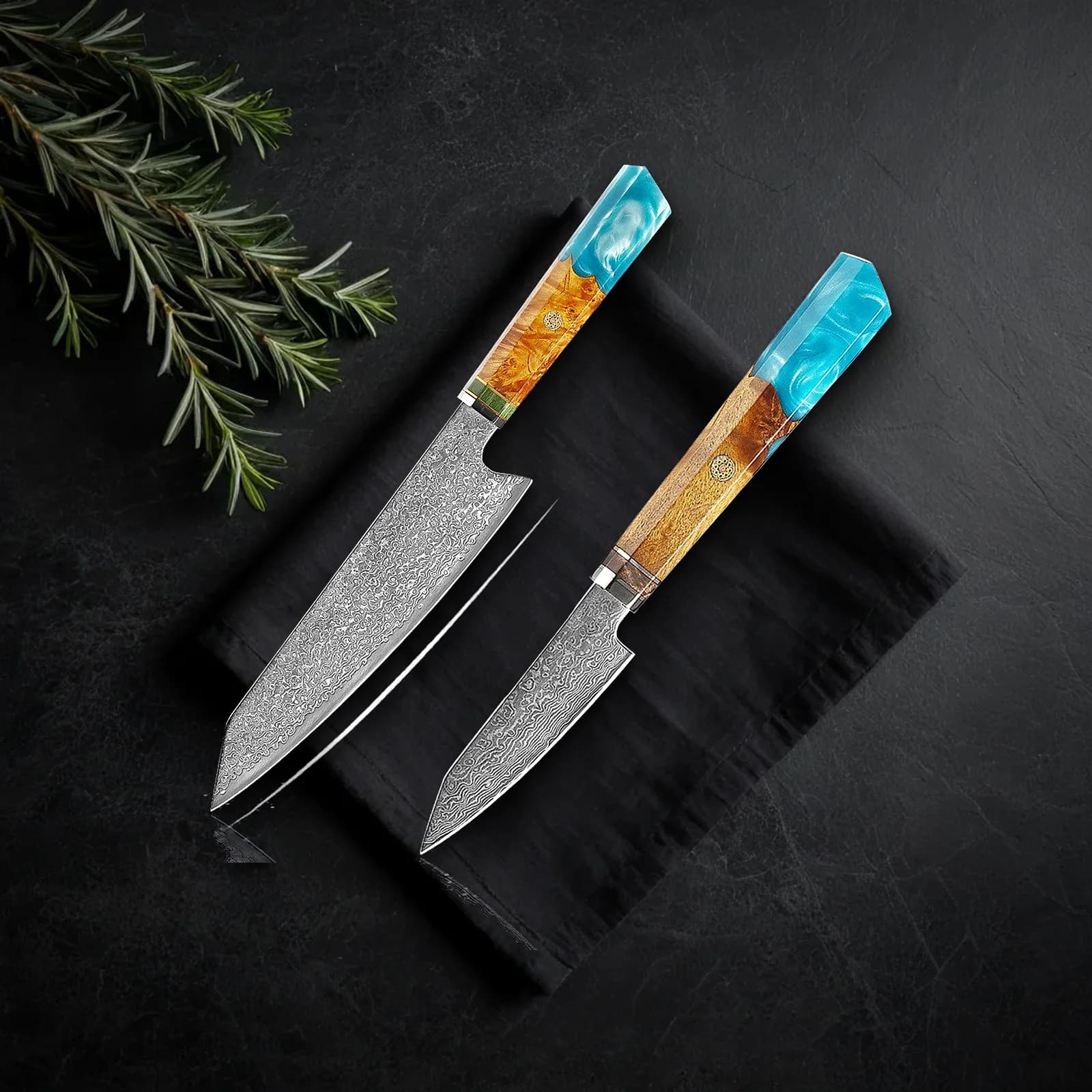
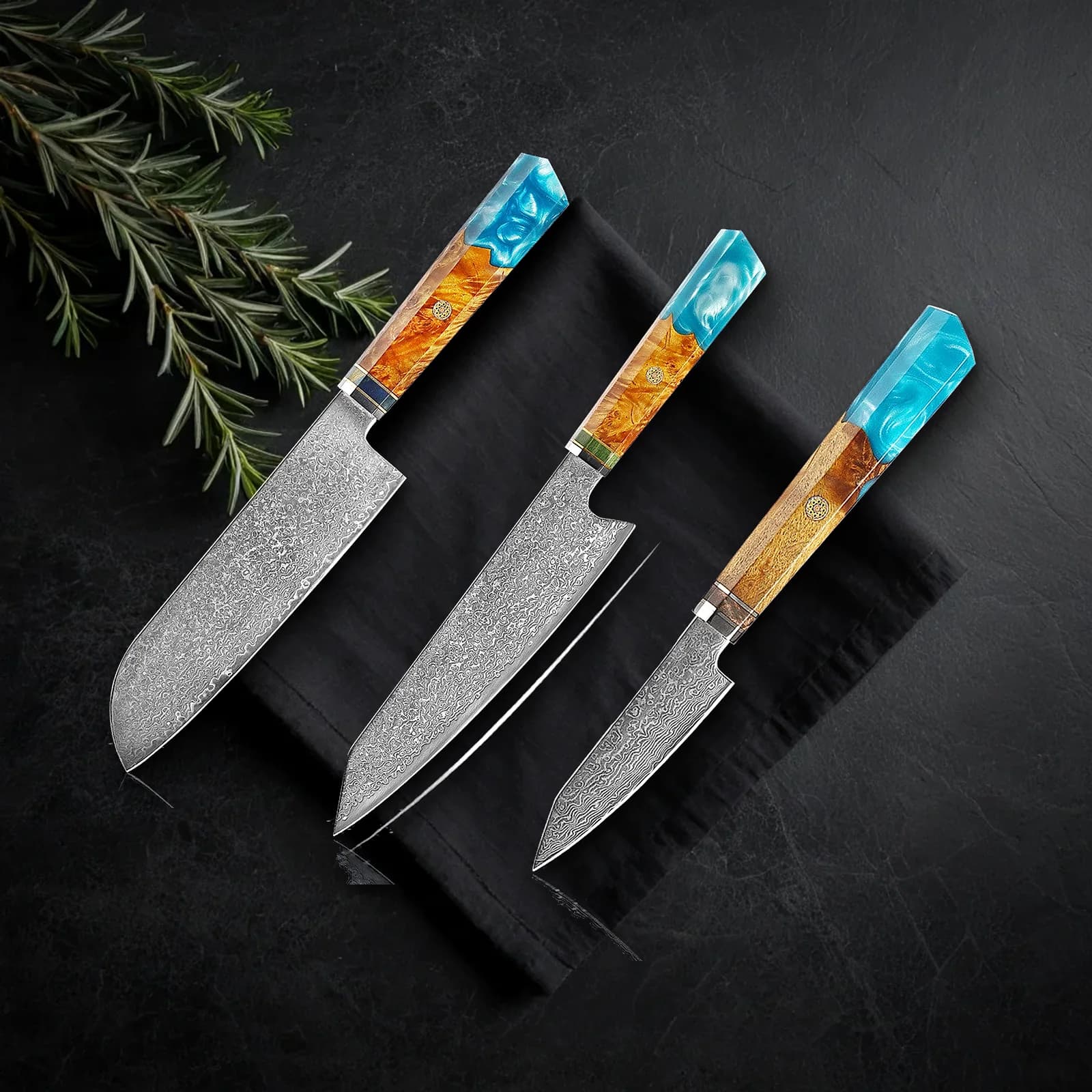
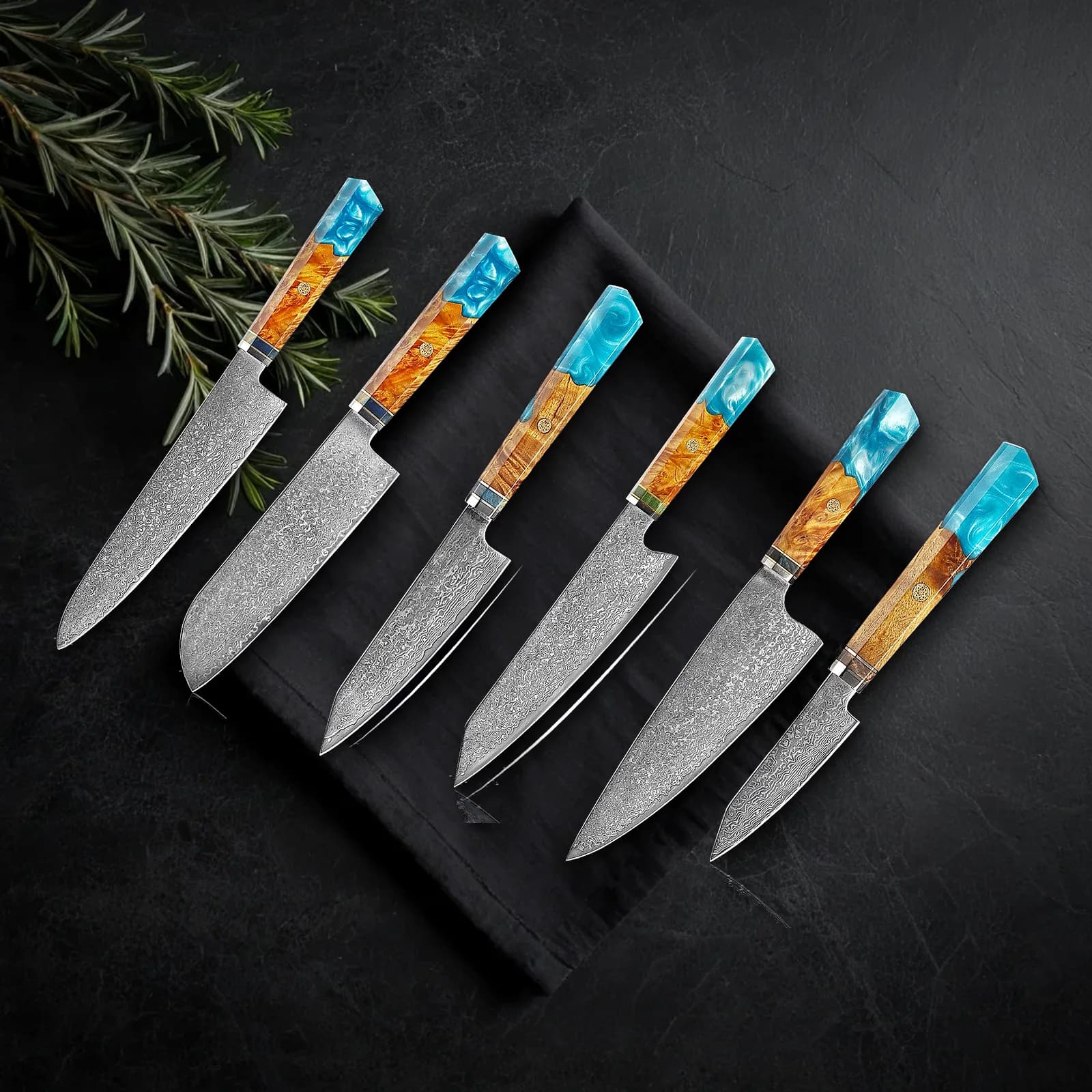
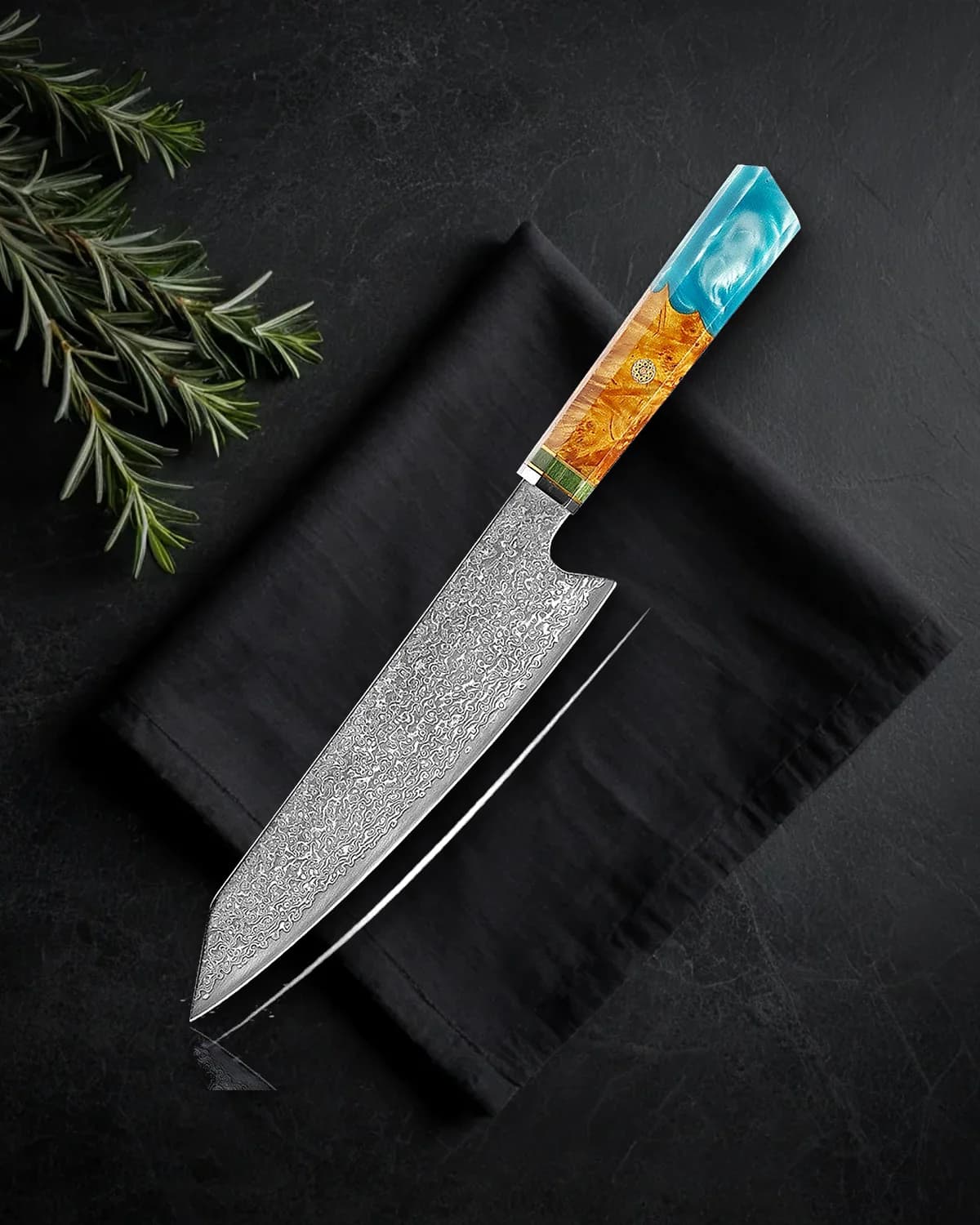
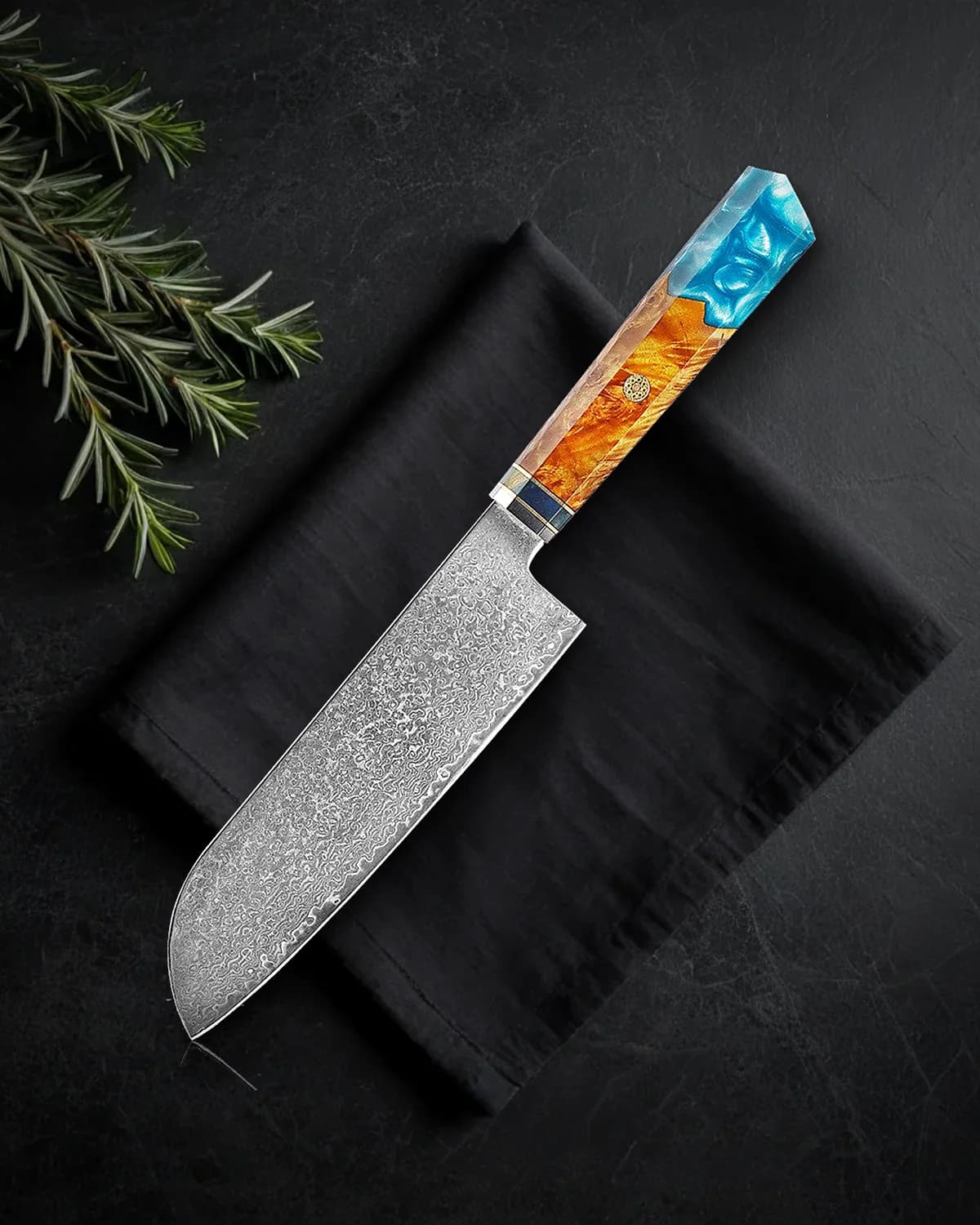
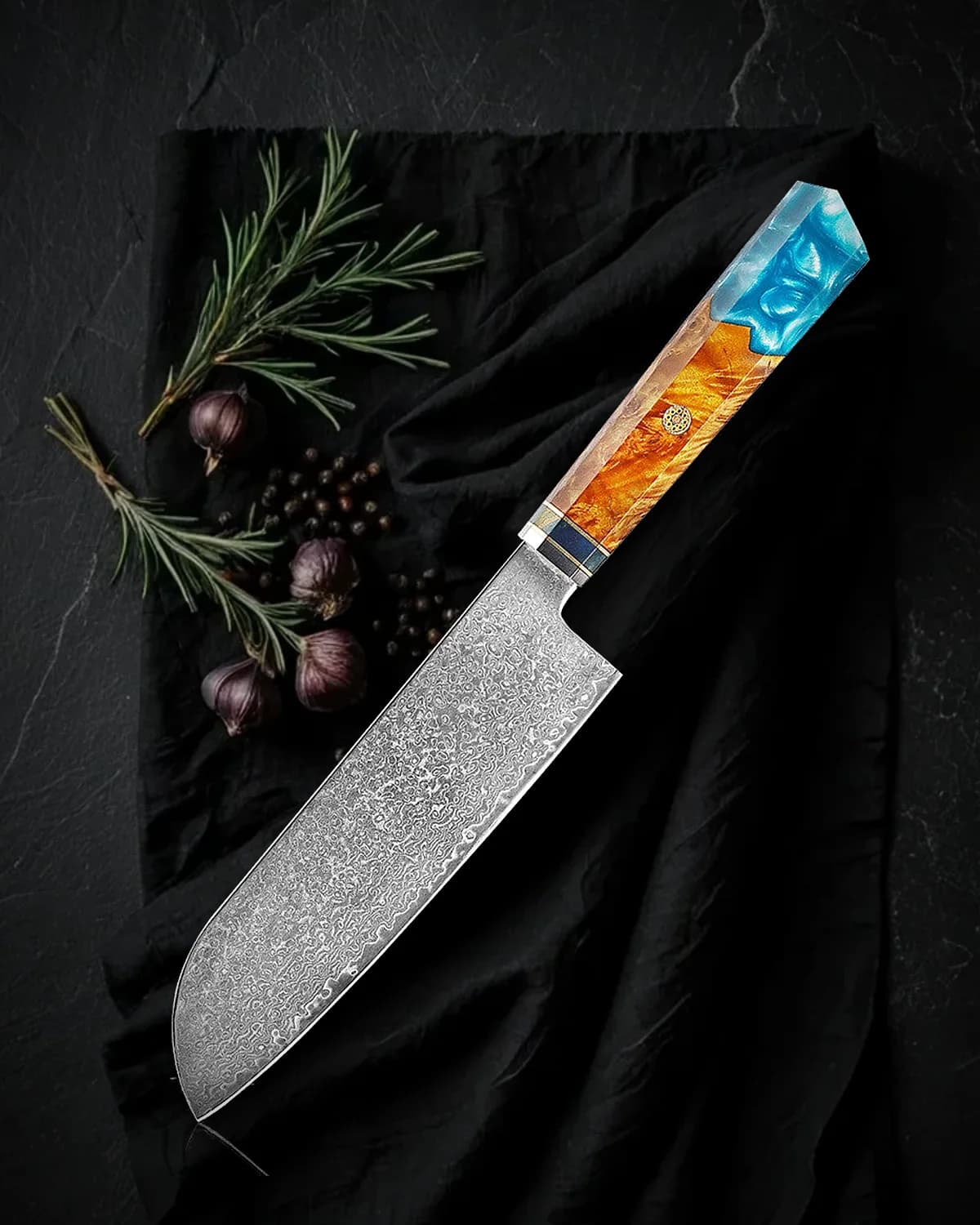
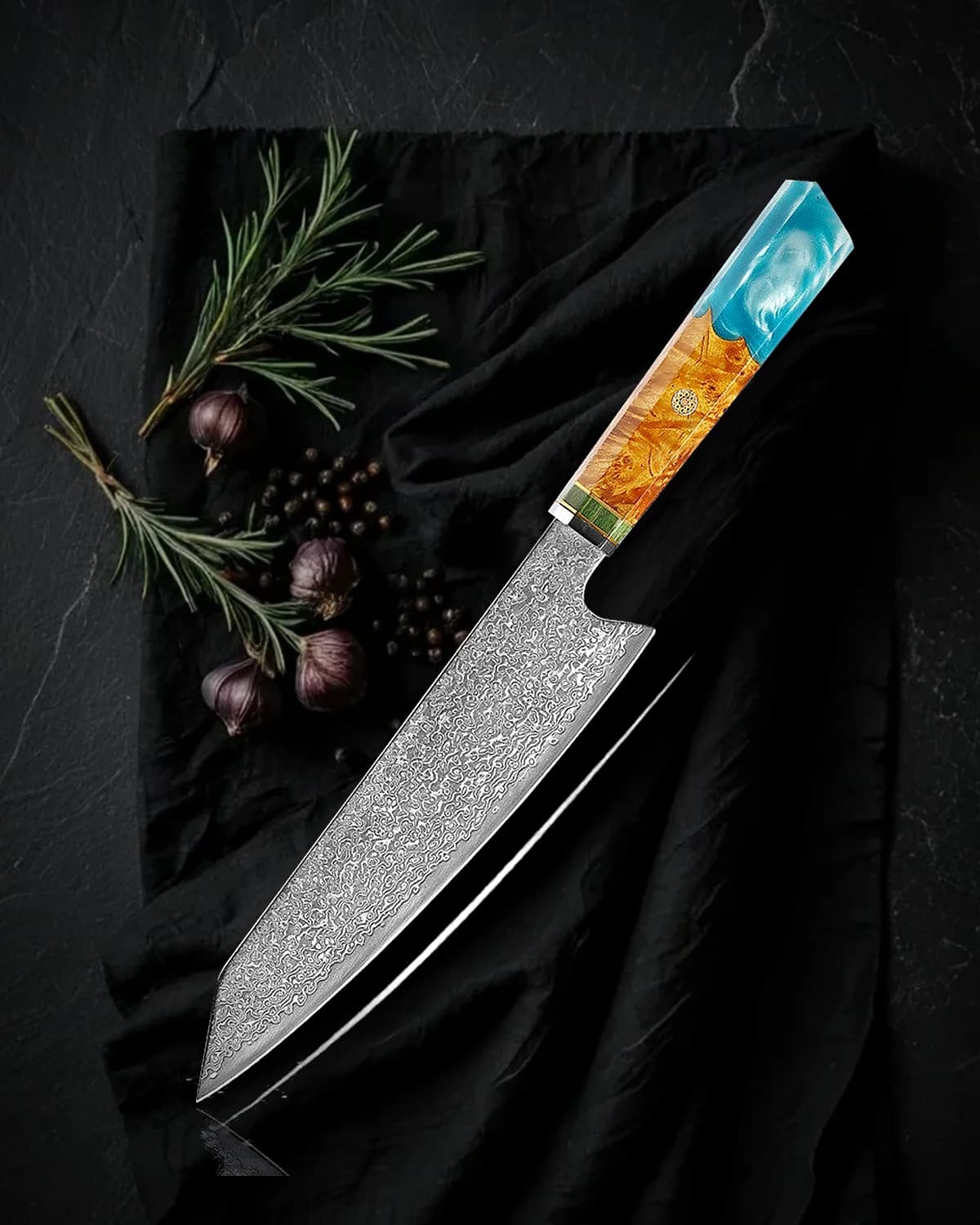
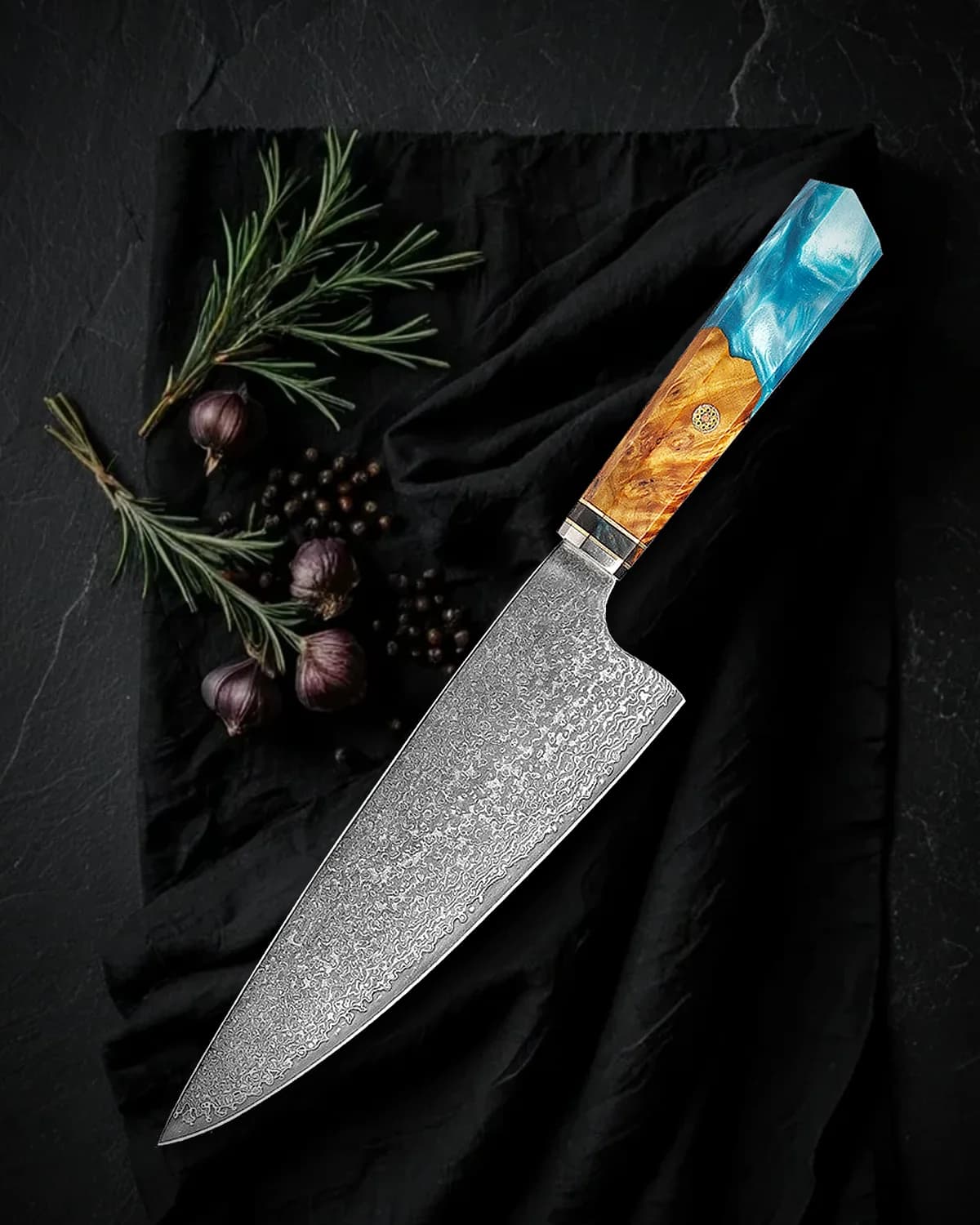
All six Kaen knives are forged Damascus steel with 67 layers and a high-carbon stainless core at 60–62 HRC, with the pattern acid-etched, not printed. Every blade has a different pattern (look at the photos on each product page: they are the real knives) and the layers reach the edge. You can run all six tests in this article on any of them, and if you are not convinced, you have 30 days to send it back.
If you want to start with one, the 18 cm Santoku is the easiest to master; if you would rather cover the whole kitchen, the Complete Set brings Gyuto, Nakiri and Petty with 69.90 € off.
Questions fréquentes
- How can I tell if a knife is real Damascus?
- Check whether the pattern reaches the edge and shows on the spine (layers running through the blade), whether the two faces have similar but not identical patterns, and whether the pattern is irregular and does not repeat. A laser etch is flat, identical on both faces and disappears when sharpened.
- Is laser-etched Damascus steel bad?
- It is not dangerous, but it is an ordinary steel knife (50–54 HRC) with a drawing on top: it loses its edge in days and the pattern fades with use. It has none of the advantages of real Damascus.
- How much does a real Damascus knife cost?
- Rarely under 60–70 € for a 20 cm blade; 100–200 € is usual. Under 30 € it is etched. Kaen knives run from 69.95 € (Petty) to 119.95 € (Nakiri), and the sets take up to 89.75 € off.