Kaen Magazin
Does Damascus steel rust? Stains, rust and how to prevent it
Why a Damascus knife can stain, how to tell patina from rust, how to remove it in five minutes, and the three habits that keep it away for good.
Kaen5 Min. Lesezeit
"Does Damascus steel rust?" is one of the most common searches before buying a Japanese knife, and the answer hinges on a word almost nobody checks on the spec sheet: stainless. There is carbon-steel Damascus, which rusts if you so much as look at it wrong, and stainless Damascus, which does not rust with normal use. This article explains the difference, what those stains that sometimes appear are, how to remove them and how never to see them again.
Carbon Damascus vs stainless Damascus
Traditional Damascus (and much of today's handmade work) is made from carbon steels: they cut wonderfully and sharpen easily, but they have little or no chromium, and without chromium iron reacts with water and oxygen. A knife like that can stain in an afternoon if left wet, and needs oiling between uses.
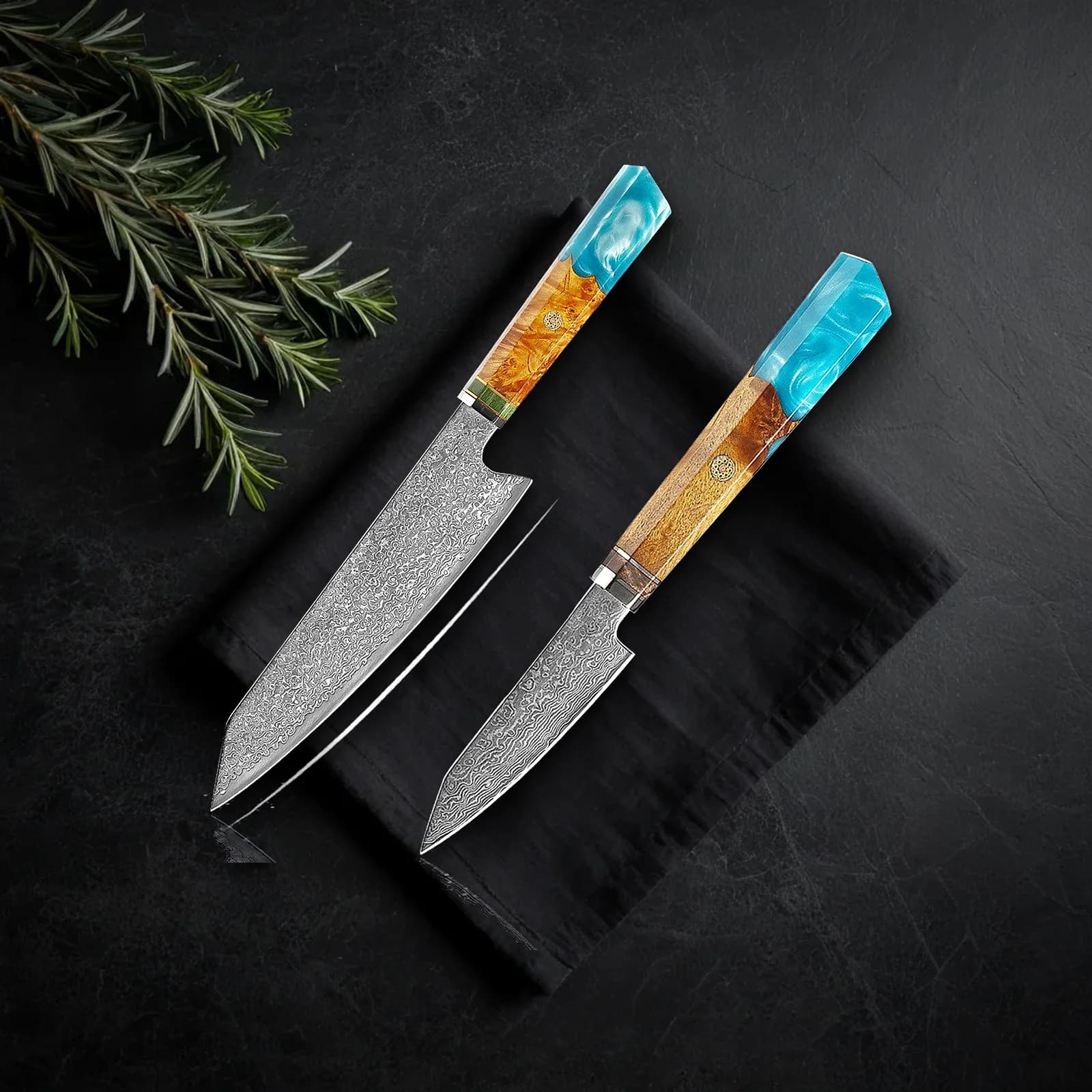
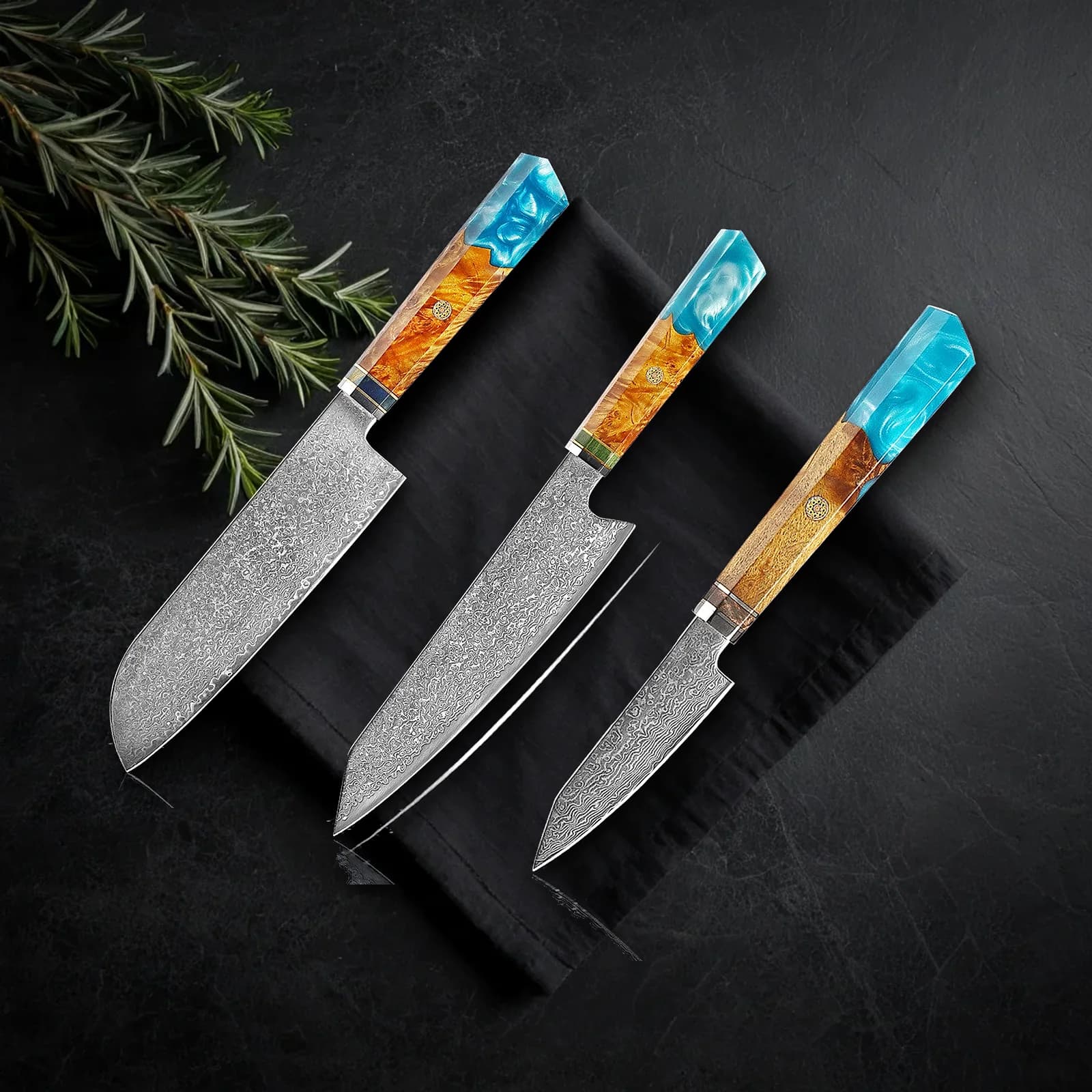
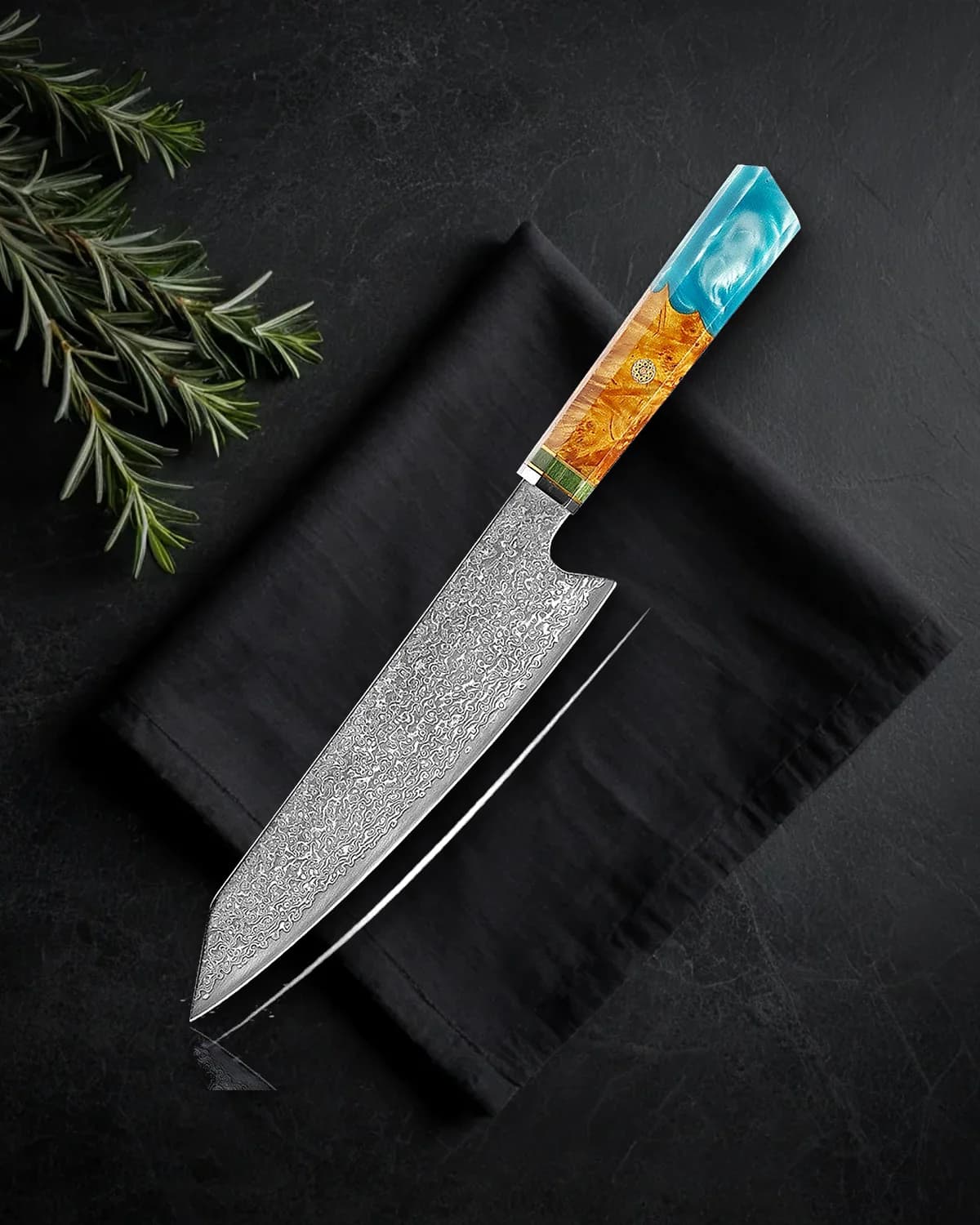
Modern kitchen Damascus, like the one in Kaen knives, uses a high-carbon stainless steel core (over 13% chromium) wrapped in layers that are stainless too. The chromium forms an invisible film of chromium oxide that protects the iron: the knife does not rust with normal use and needs no oil. If you want to know how it is built, it is in what Damascus steel is.
Stainless does not mean immune. It means you have to mistreat it for it to stain: leaving it soaking, putting it in the dishwasher, storing it wet, or leaving lemon juice or salt on it overnight.
Patina, stains and rust: what each one is
Not everything that shows up on the blade is rust:
- Patina: on carbon steel, a uniform grey-blue layer that forms with use. It is protective and sought after. On stainless it barely appears.
- Water spots: whitish dots or rings from drops left to dry (limescale). Superficial; they come off with a cloth and a drop of vinegar.
- Surface rust: orange or brown spots, usually on the edge, the tip or where the blade meets the handle. Comes off easily if treated early.
- Pitting: small craters where rust has eaten into the steel. Avoided by treating surface rust in time; once formed, they can be polished but remain.
On stainless Damascus, with normal use, you will only see the odd water spot if you do not dry it. Anything else takes neglect.
How to remove rust from a Damascus knife
Five minutes and household items. From least to most aggressive:
- Baking soda and water. Make a thick paste, apply it to the stains and rub along the direction of the pattern with a cork or a soft cloth. Rinse and dry. Removes 90% of stains and respects the pattern.
- Rust eraser (an abrasive rubber from a hardware or knife shop). Rub gently, always along the layers. Very effective on specific rust spots.
- White vinegar on a cloth, on the stain, two or three minutes, then rinse immediately. Do not leave it longer: the acid attacks the steel too. Afterwards, baking soda to neutralise, and dry.
- Very fine sandpaper (2000 grit) or 0000 steel wool, wet, only for pitting and always along the pattern. This is the last resort; it slightly softens the acid etch of the Damascus in that area.
What you should not use: green scouring pads, bleach, chlorine cleaners or industrial "rust removers". They scratch, dull the pattern or attack the steel.
When you are done, wash with warm water and mild soap, dry thoroughly and, if you like, a drop of camellia oil or neutral cooking oil on a cloth. On stainless it is not necessary, but it does no harm.
Does rust affect the Damascus pattern?
Damascus layers are two slightly different steels, and the pattern is revealed by a controlled acid etch. That is why acids (lemon, vinegar, tomato for hours) and aggressive cleaning can dull or blur the pattern in the treated area. It is not dangerous, it is cosmetic, and that is why everything above insists on rubbing along the layers with the least abrasive thing that works.
The three habits that prevent it for good
- Wash by hand and dry immediately. Warm water, a drop of soap, a soft sponge, a cloth. Thirty seconds. It is the habit that changes everything, and the only one that truly matters.
- Never the dishwasher. Not even once. Heat and detergent salts attack the steel and the handle, and knocking against other cutlery chips the edge. It is the number one cause of stains on stainless knives.
- Store it dry and in its sheath. Every Kaen comes with a sheath: a dry, covered blade does not rust. No leaving it on the drying rack overnight or in a damp drawer.
They are developed, with the fourth habit (a wooden board) and sharpening, in the care guide.
If you are about to buy: what to look for
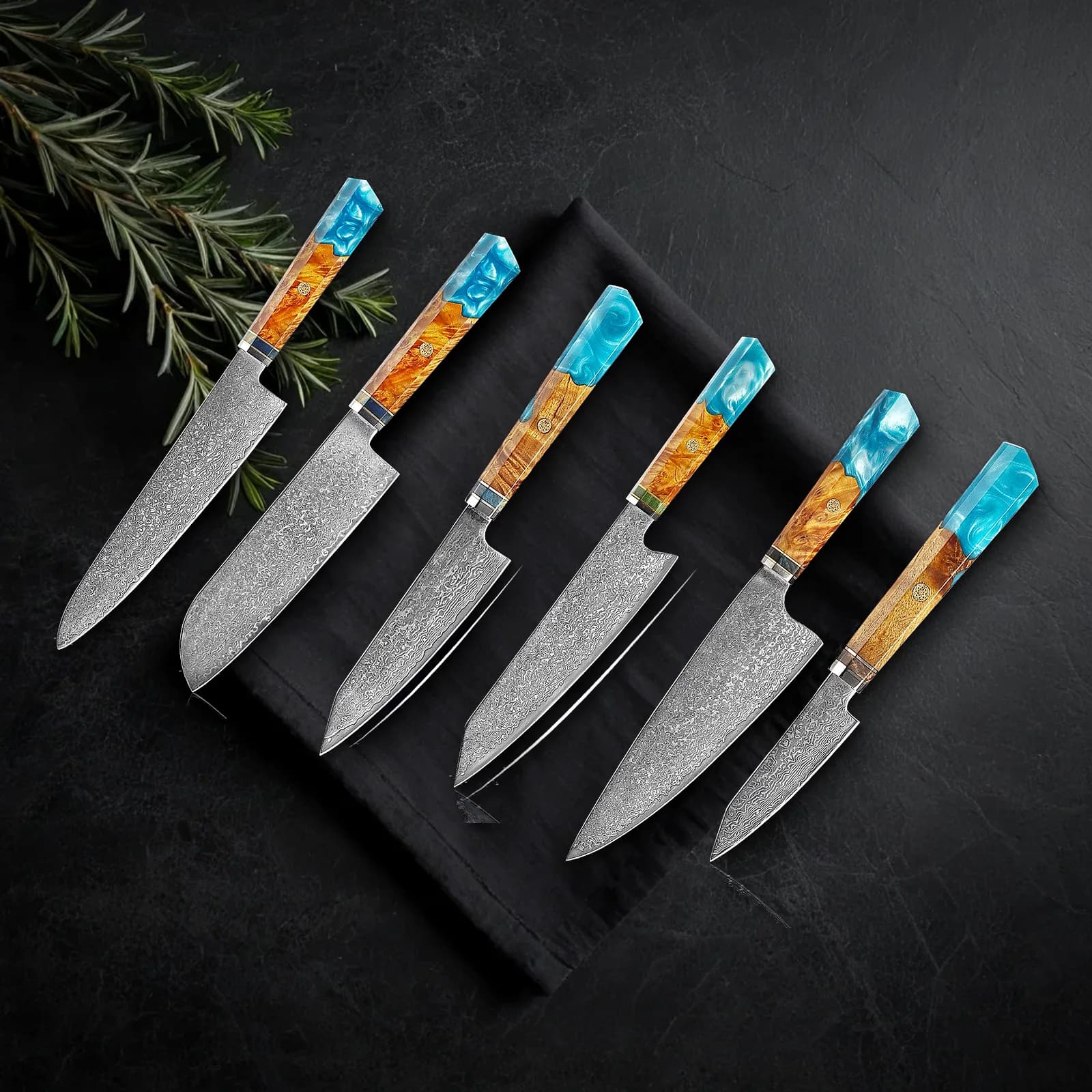
Look for the word stainless on the spec sheet applied to the core, and a chromium percentage or the name of the steel (10Cr15CoMoV, VG-10, AUS-10). If it only says "Damascus steel" and nothing else, ask. All six Kaen knives are stainless 67-layer Damascus with a 60–62 HRC core; the Nakiri, with its wide blade, is the best one for seeing how the pattern shrugs off years of acidic vegetables.
Häufige Fragen
- Does Damascus steel rust?
- Carbon-steel Damascus does, easily. Modern Damascus with a stainless core (like Kaen) does not rust with normal use: it only stains if left wet, soaking or in the dishwasher. Washing by hand and drying right away prevents it.
- How do I remove rust from a Damascus knife?
- A paste of baking soda and water rubbed gently along the pattern with a cork or cloth; if that is not enough, a rust eraser. Vinegar only for a few minutes, then rinse. Never a green scouring pad or bleach. Then wash, dry well and store in the sheath.
- Can a Damascus knife go in the dishwasher?
- No. Heat and detergent salts attack the steel and dull the pattern, the wood-and-resin handle deteriorates and knocks against other cutlery chip the edge. It is the main cause of stains and of rejected warranty claims.
- Does a Damascus steel knife need oiling?
- If it is carbon steel, yes, after every use. If it is stainless, no; drying it is enough. A drop of camellia oil before long storage does no harm.