Kaen Magazin
Gyuto vs Santoku: which to choose (and when the Nakiri beats both)
The honest comparison of the two best-selling Japanese knives: shape, cutting technique, size, who each one is for, and where the Nakiri fits in.
Kaen5 Min. Lesezeit
If you are buying your first Japanese knife, the question is almost always the same: Gyuto or Santoku? Both are "do-everything" knives, both are sold as the one knife you need, and both are right, but for different people and different kitchens. This comparison gets to the point: what changes between them, how it shows on the board and which one suits what you cook. And at the end, why the right answer is often "neither: a Nakiri".
The differences at a glance
| Kaen Gyuto 20 cm | Kaen Santoku 18 cm | |
|---|---|---|
| Translation | "Cow sword" | "Three virtues" |
| Blade | 20 cm, narrower, pointed tip | 18 cm, wider, rounded tip |
| Edge profile | Curved: allows rocking | Almost straight: vertical and push cuts |
| Weight | 339 g | 205 g |
| Natural technique | Rocking and long push strokes | Tap-chop (up and down) and short push |
| Strength | Large pieces, meat, whole fish | Vegetables, daily chopping, small boards |
| Weakness | Needs a big board, longer to master | Little run for large pieces, no rocking |
| Who it is for | Anyone coming from a Western chef knife | Beginners or anyone cooking in a small space |
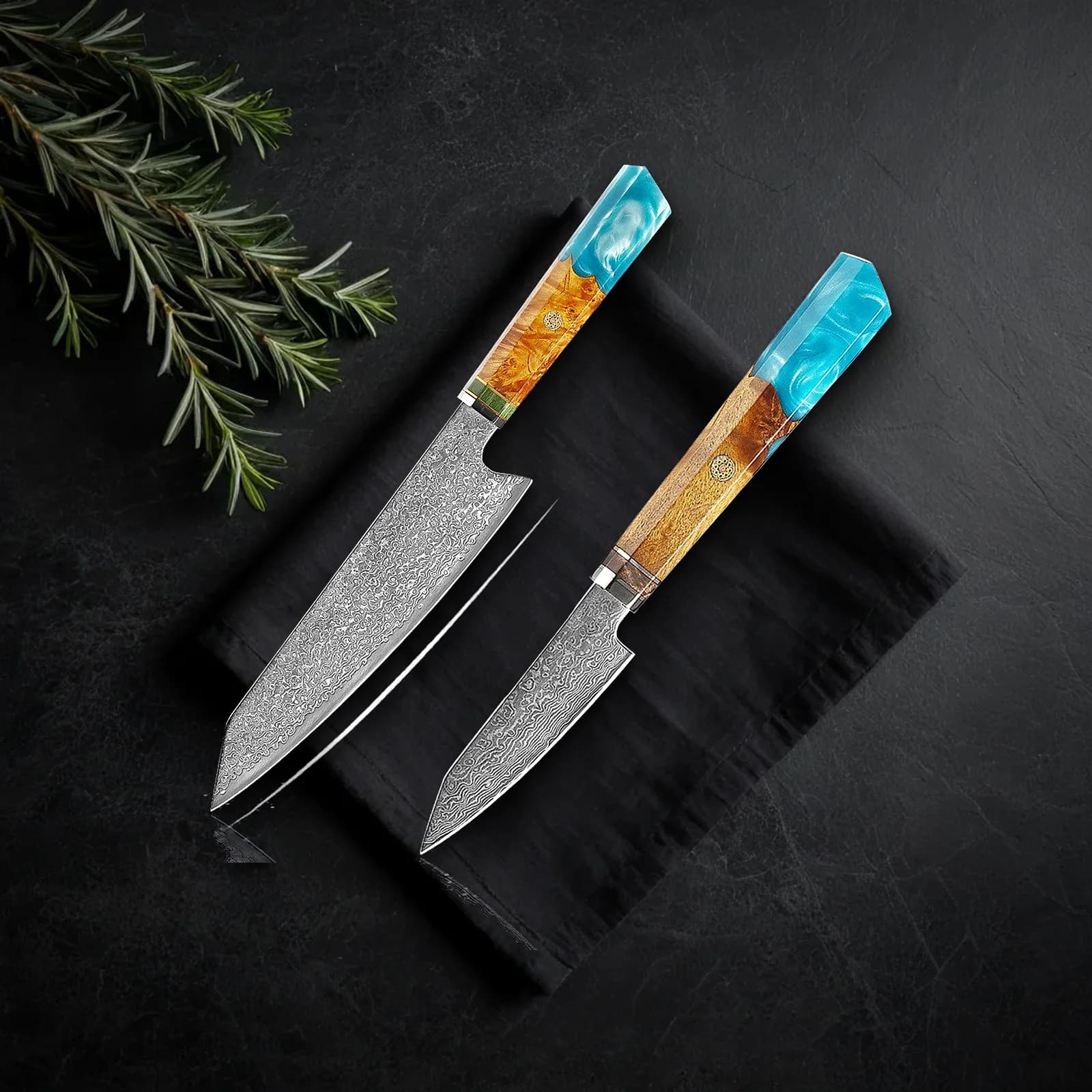
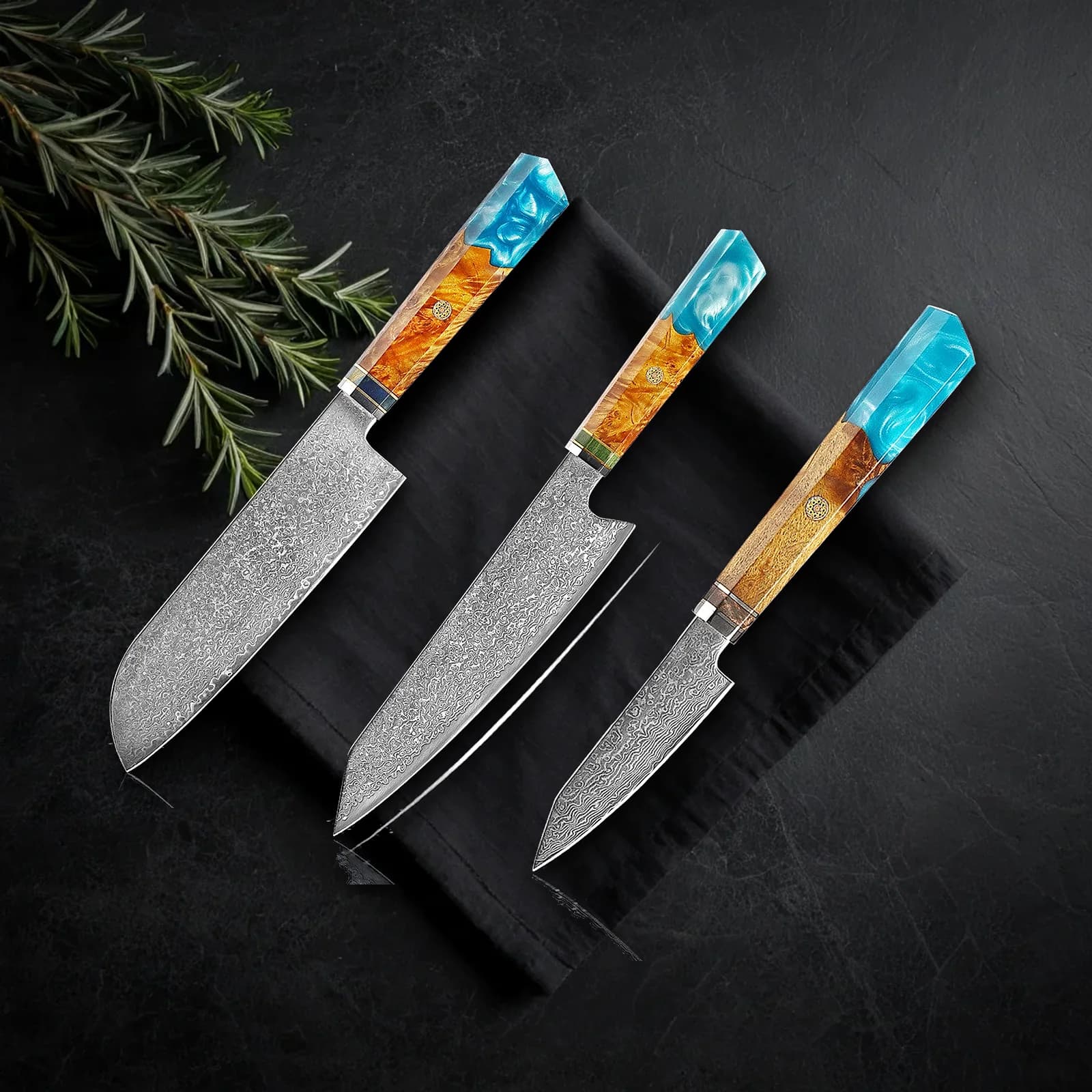
At Kaen both share the same 67-layer Damascus steel at 60–62 HRC, the same octagonal handle and the same sheath. The difference is shape, not quality.
The Gyuto: the Japanese chef knife
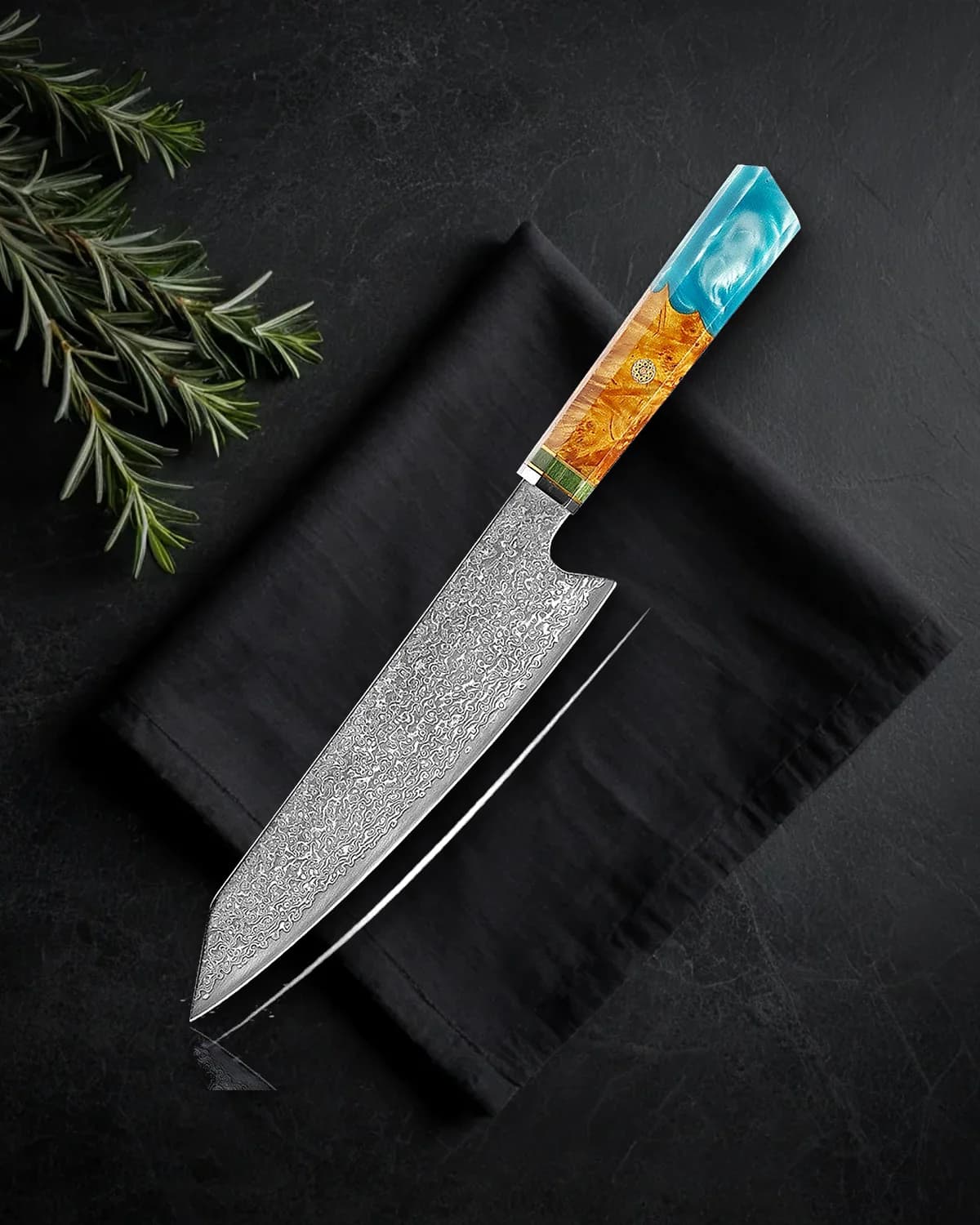
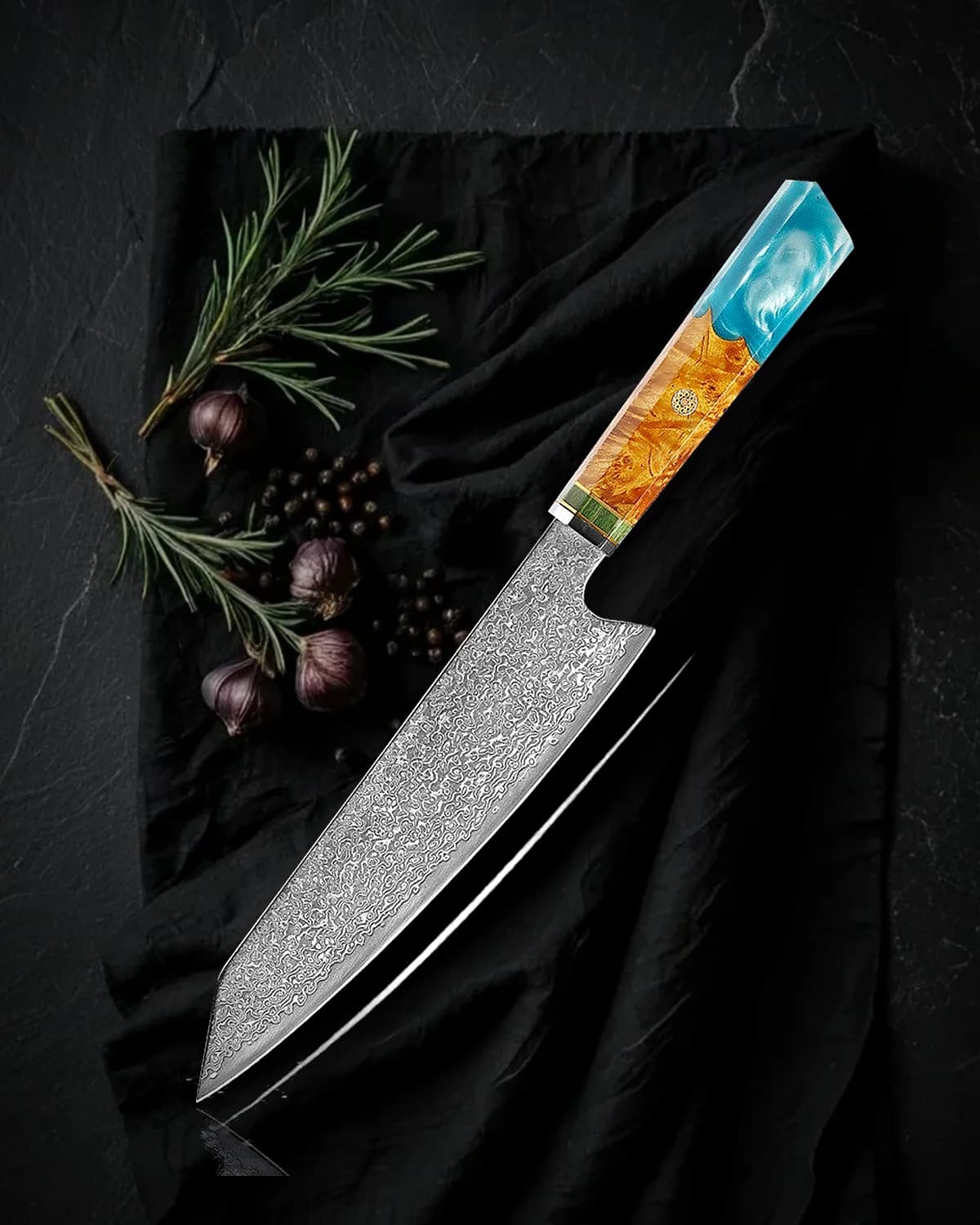
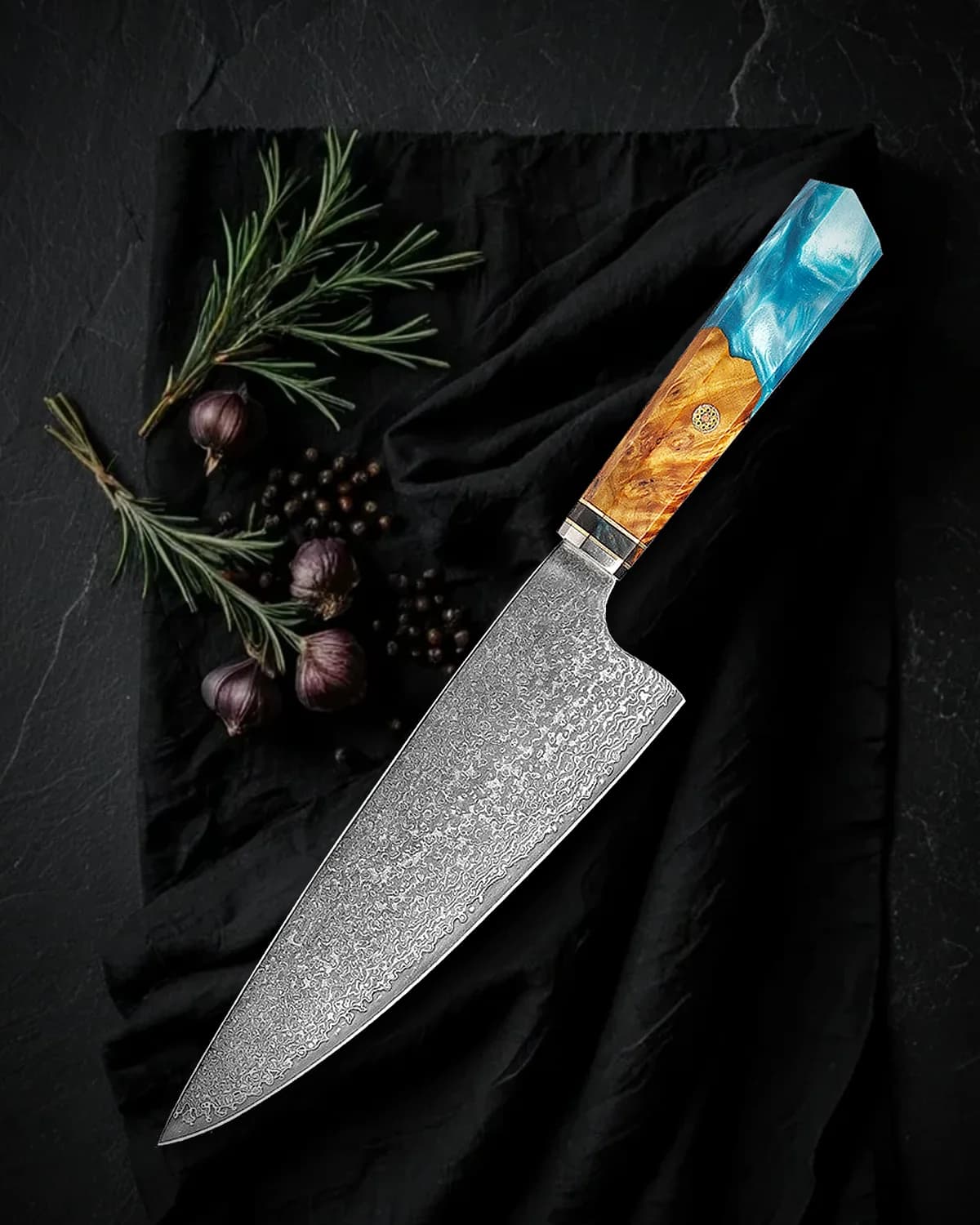
The Gyuto is the Japanese version of the chef knife: a long blade with a gentle curve rising to a pointed tip. That curve is the key. It allows rocking (rolling the blade on the board with the tip down) to chop herbs or onions very fast, and it allows long push cuts to slice a loin or a whole fish in one pass.
With 20 cm of blade it has the run for any piece: a squash, a cabbage, a tenderloin. And the pointed tip goes wherever needed: boning, removing sinew, opening a cut. It is the knife a professional cook can work with all day without changing tools.
In exchange it asks for a decent-sized board (40 cm or more) and some practice to make the most of the curve. If you have never used a long knife, it will feel big for the first few weeks.
The Santoku: the all-rounder of Japanese kitchens
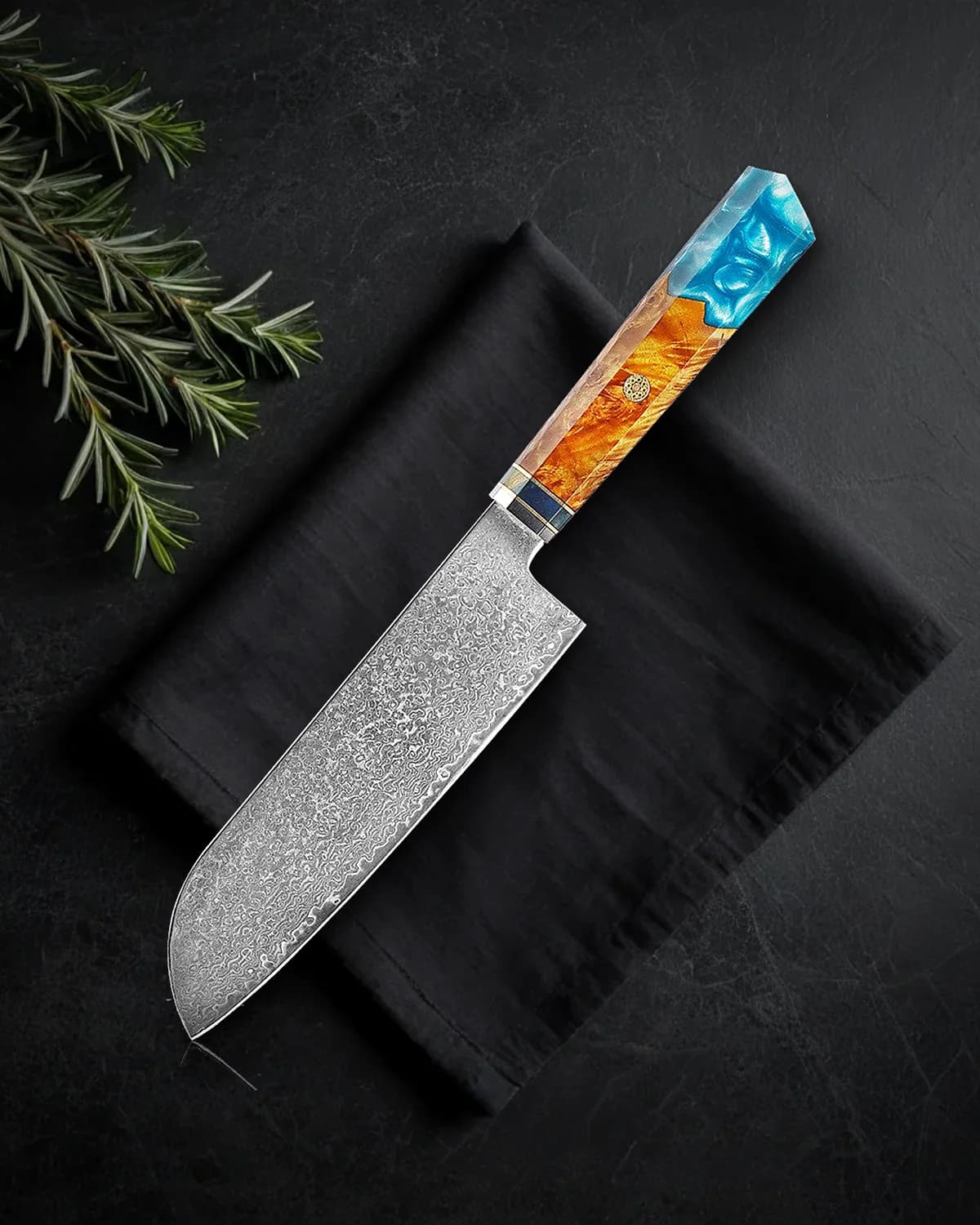
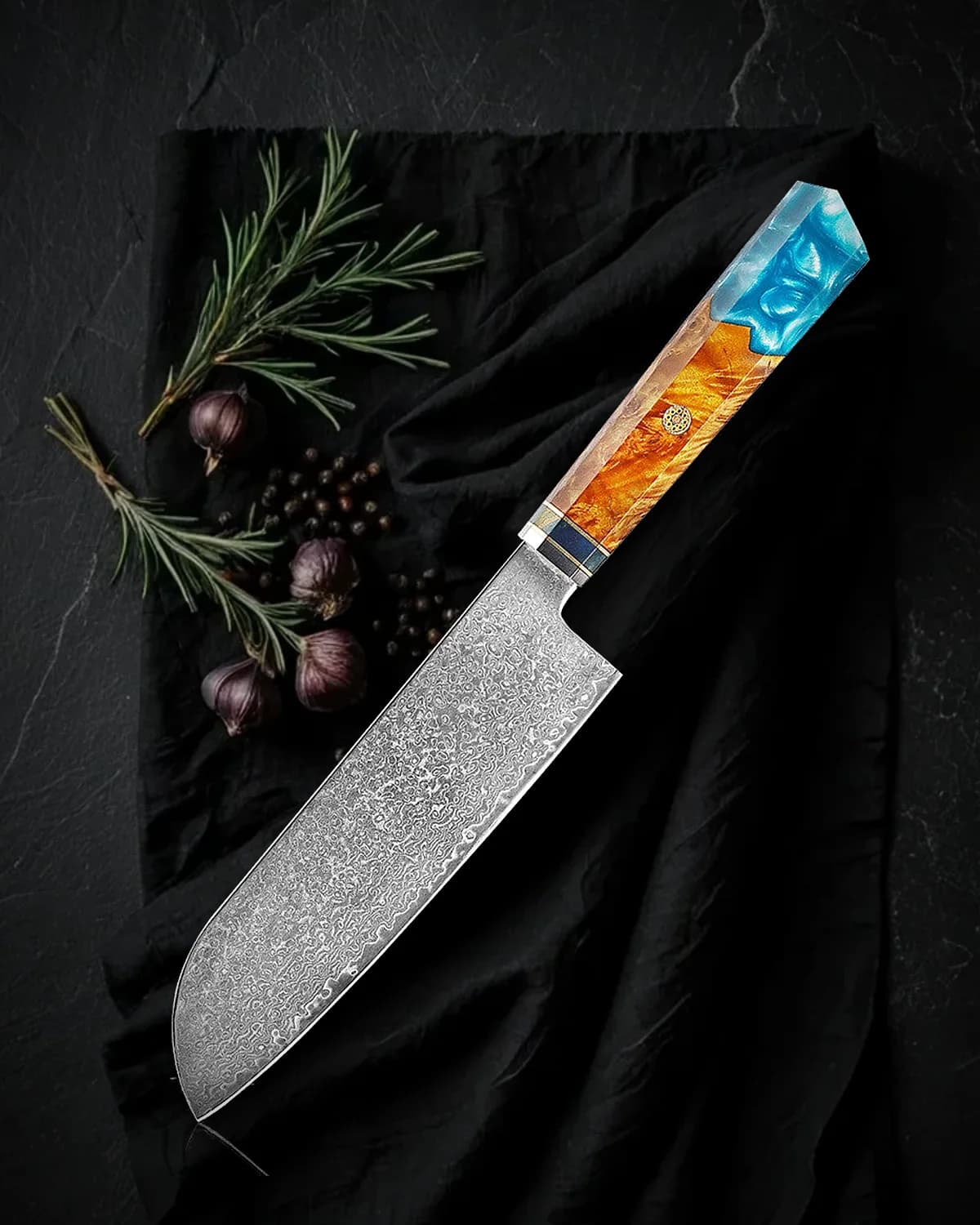
Santoku means "three virtues": meat, fish and vegetables. It is the knife found in almost every home in Japan. The blade is shorter and wider, with the spine dropping to a rounded tip, and the edge is almost straight.
That shape changes the technique: instead of rocking, you cut down and forward in a short motion. It is more intuitive for beginners, safer (the rounded tip does not dig into anything) and more effective for vegetables, because the straight edge meets the board along its whole length and leaves nothing half-cut.
At 205 g and 18 cm it is nimble, fits any board and does not tire you. Its limit shows with large pieces: filleting a whole fish or breaking down a big squash is more comfortable with the Gyuto. And it does not rock: if that motion is deeply learned, you will miss it.
How it shows on the board
Three real situations:
- Chopping an onion. With the Santoku: fast vertical cuts, straight edge, everything cut through. With the Gyuto: quick rocking with the tip down. Both do it well; the Santoku needs less technique.
- Slicing a chicken breast or a loin. The Gyuto wins: 20 cm of blade in a single push stroke. With the Santoku it takes two passes.
- Shaving a courgette or a tomato. The Santoku, with its wide blade and straight edge, makes very even slices. The Gyuto does too, but you guide it more.
Which to choose based on what you cook
- Mostly vegetables and everyday dishes, in a normal or small kitchen: Santoku. It is the easiest first Japanese knife to master.
- Meat and fish often, large pieces, and you have board and space: Gyuto. It is the knife that does 80% of the work.
- Coming from a German chef knife: Gyuto, no question. Same technique, half the effort. Compare both worlds in Japanese vs German knives.
- Want the Santoku's versatility with a tip for fish: look at the Bunka, a Santoku with an angled tip.
And when the Nakiri beats both
If what you really cut most is vegetables, neither Gyuto nor Santoku: the Nakiri beats both at that job. A rectangular blade, a perfectly straight edge, and at Kaen 406 g that do the cutting for you. Every time it comes down it cuts through to the board along its full length: a cabbage, a sweet potato, a kilo of onions, without tiring. It has no tip and is not for bone-in meat, but as a specialist it has no rival.
That is why the trio we recommend to almost everyone is not Gyuto + Santoku (too much overlap) but Gyuto + Nakiri + Petty: the big one for meat and fish, the vegetable specialist and the small one for peeling and details. Three shapes, three jobs, none repeated. It is the Complete Set, and it costs 69.90 € less than the three knives bought separately.
The short answer
- One knife, beginner, small kitchen: Santoku.
- One knife, meat and fish, big board: Gyuto.
- Two: Gyuto + Petty (Essential Set).
- Three: Gyuto + Nakiri + Petty (Complete Set).
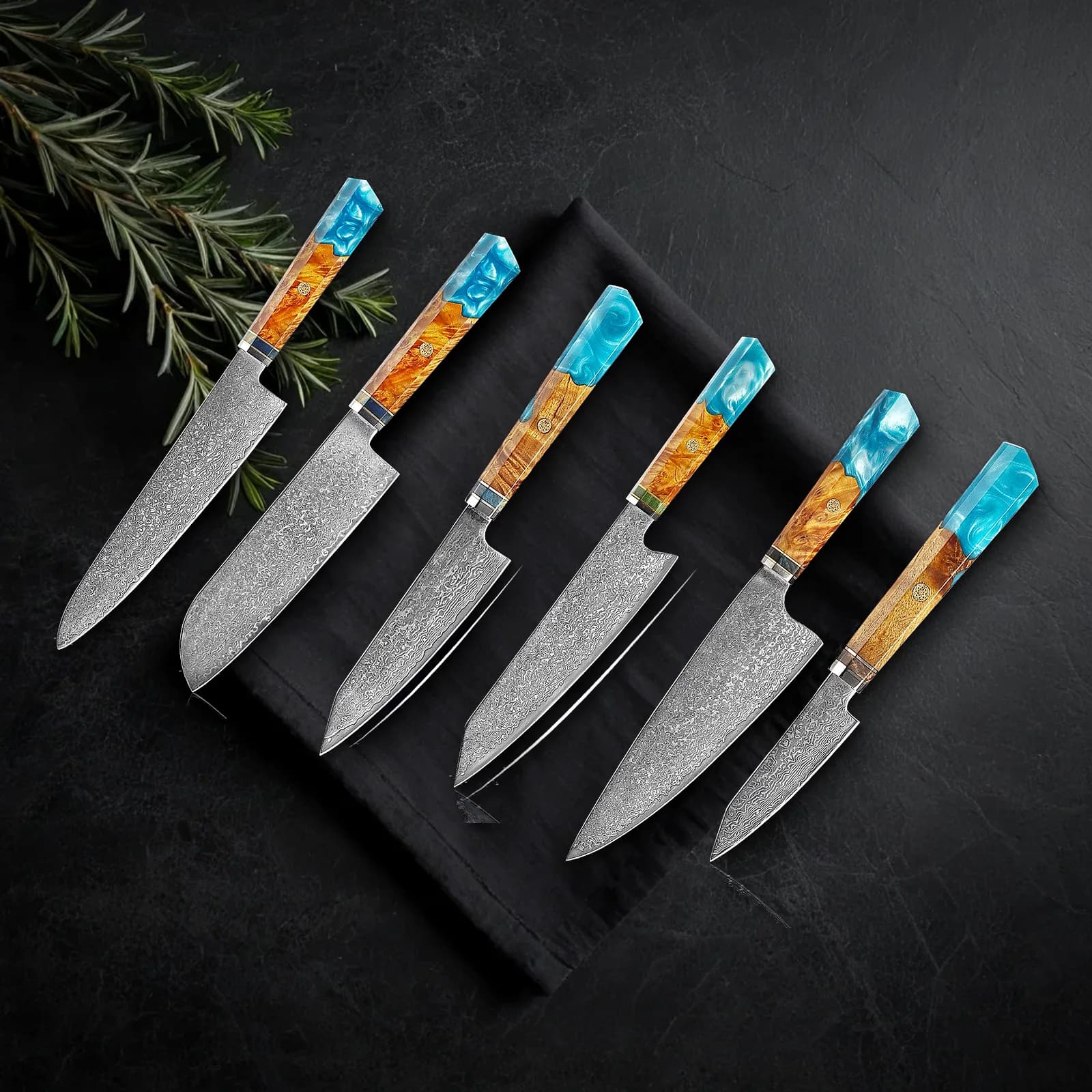
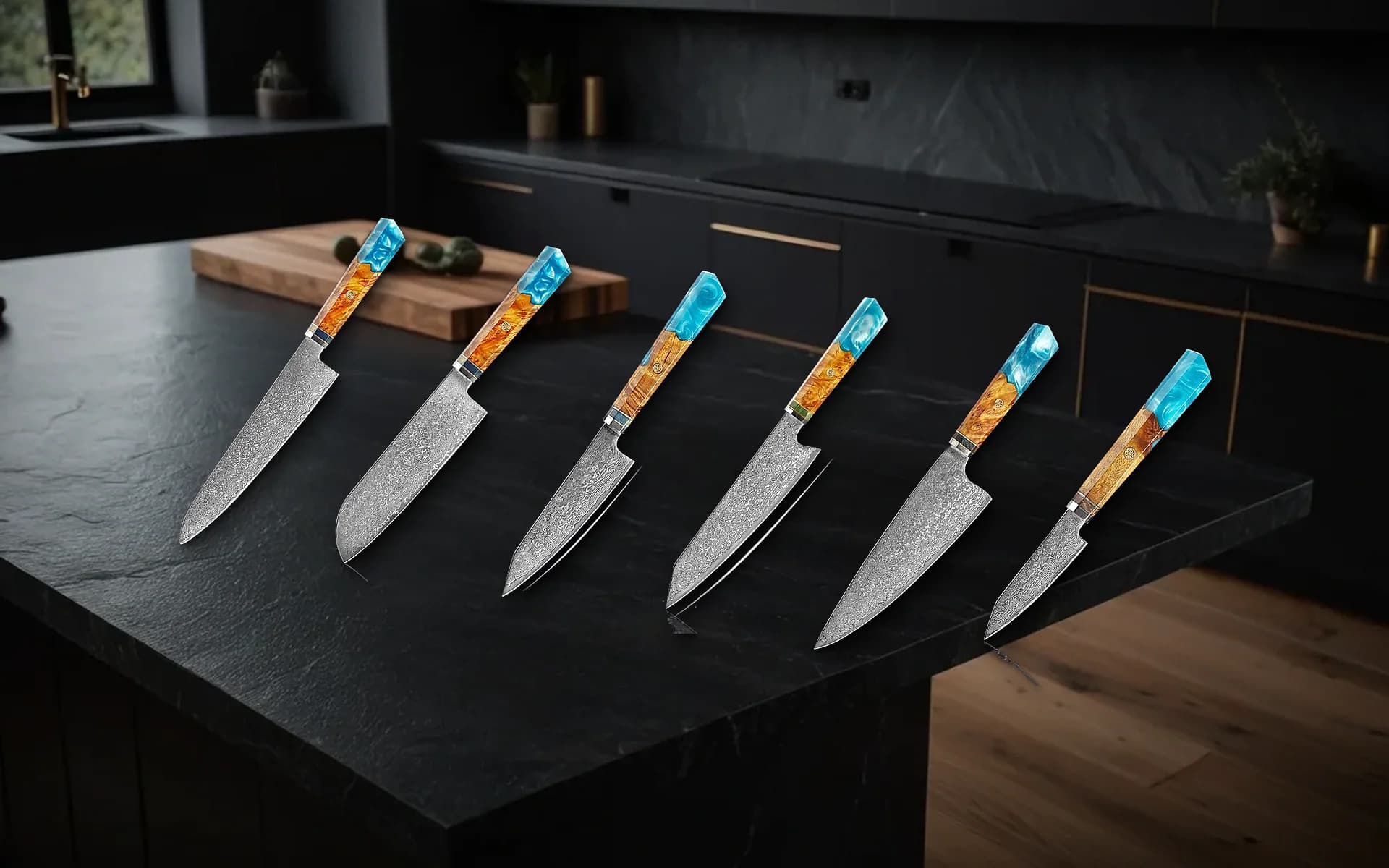
- All six, because you cook a lot or it is a big gift: Master Collection.
Still unsure? The guide to choosing a Japanese knife walks you through the four main shapes in five minutes.
Häufige Fragen
- What is the difference between a gyuto and a santoku?
- The gyuto is longer (20 cm), narrower and has a curved edge for rocking and long cuts; the santoku is shorter (18 cm), wider, with a rounded tip and an almost straight edge for vertical cuts. The gyuto does better with large pieces; the santoku with vegetables and on small boards.
- Santoku or gyuto for a beginner?
- Santoku: its straight edge and rounded tip make cutting more intuitive and safer. If you come from a Western chef knife and already rock-chop, the gyuto will feel more natural.
- Do I need a santoku if I have a gyuto?
- No: they overlap a lot. If you already own a gyuto, the most useful second knife is the petty (small) and the third the nakiri (vegetables). That is why the Complete Set is Gyuto + Nakiri + Petty.
- Which is better for vegetables, santoku or nakiri?
- The nakiri. Its rectangular blade and completely straight edge cut through to the board along their full length, and its weight does the work. The santoku is more versatile, but for large amounts of vegetables the nakiri is faster and cleaner.